

Finding an XXXXL shirt should be simple, but for many people, it becomes frustrating after just a few searches. One brand’s 4XL fits perfectly, while another feels tight across the chest, short in the sleeves, or far too loose around the waist. The problem usually isn’t your body size. It’s the lack of consistent sizing standards across clothing brands.
The good news is that shopping for larger clothing has improved a lot over the past few years. Many manufacturers now create collections specifically for big and tall customers instead of simply increasing the measurements of a medium-sized shirt. That change leads to better shoulder proportions, improved sleeve openings, longer shirt lengths, and more comfortable movement throughout the day.
Whether you’re buying your first XXXXL shirt, replacing old wardrobe staples, or searching for premium-quality clothing, this guide explains everything you need to know before spending your money. You’ll learn how sizing works, how to measure yourself correctly, which fabrics perform best in different climates, how to recognize quality construction, and what separates a well-made shirt from one that loses its shape after a few washes.
Instead of relying on guesswork, you’ll have a complete buying guide that helps you choose shirts that fit well, feel comfortable, and last much longer.
What Does XXXXL Shirt Actually Mean?
Many shoppers assume every clothing company follows the same sizing system. Unfortunately, that isn’t true.
An XXXXL shirt, often written as 4XL, represents a size category rather than an exact measurement. Different manufacturers create their own size charts based on their target market, country, and production standards.
Generally, a men’s XXXXL shirt fits people with a chest measurement between 50 and 54 inches (127–137 cm). However, this range can vary by several inches depending on the brand. Some Asian manufacturers produce smaller fits, while many American big-and-tall brands offer roomier proportions.
This is why experienced shoppers always compare measurements instead of relying on size labels.
Typical XXXXL Measurements
| Measurement | Approximate Size |
| Chest | 50–54 inches |
| Waist | 46–50 inches |
| Neck | 19–20 inches |
| Sleeve Length | 36–38 inches |
| Shoulder Width | 22–24 inches |
These measurements provide a useful starting point, but the brand’s official size chart should always take priority.
XXXXL vs 4XL vs Big & Tall: What’s the Difference?
Many people believe these terms describe different sizes. In reality, they often describe different product categories.
XXXXL or 4XL
These labels are usually interchangeable. Most clothing brands use either XXXXL or 4XL depending on their marketing style.
Big Size
Big sizing focuses mainly on body width. These shirts have extra room across the chest, stomach, shoulders, and sleeves.
Tall Size
Tall shirts increase body length and sleeve length without making the shirt much wider.
Big and Tall
This category combines both adjustments.
A proper Big and Tall XXXXL shirt usually includes:
- Longer torso
- Longer sleeves
- Wider chest
- Larger armholes
- Better shoulder proportions
- Extra movement across the back
This design provides a much more natural fit than simply enlarging a standard shirt.
Why Shirt Sizing Varies Between Brands
Many people blame themselves when a shirt doesn’t fit properly.
The real reason is much simpler.
Every clothing manufacturer develops its own sizing pattern, called a grading system. Once the base pattern is created, the company increases measurements according to its own standards.
Some companies add width evenly.
Others increase shoulder width, sleeve circumference, body length, and collar size separately.
That’s why two shirts labeled XXXXL may feel completely different.
Several factors influence sizing differences:
- Country of manufacture
- Fashion style
- Slim-fit vs relaxed-fit patterns
- Fabric shrinkage allowance
- Target customer
- Big & Tall specialization
Checking actual garment measurements is always more reliable than trusting the label.
Complete XXXXL Shirt Size Conversion Chart
If you shop internationally, you’ll often see different sizing systems.
| US | UK | EU | International |
| 4XL | 4XL | 64–66 | XXXXL |
| 5XL | 5XL | 68 | XXXXXL |
| 6XL | 6XL | 70–72 | 6XL |
Asian sizing usually runs smaller.
Many buyers need to order one or even two sizes larger when purchasing directly from Asian clothing brands.
How to Measure Yourself Correctly
Accurate measurements prevent most sizing problems.
Use a flexible measuring tape while wearing a thin T-shirt.
Avoid measuring over hoodies or jackets.
1. Chest
Wrap the tape around the fullest part of your chest.
Keep it level under both arms.
Do not pull tightly.
Leave enough room to breathe naturally.
2. Neck
Measure around the base of your neck where the collar normally rests.
Insert one finger between your neck and the tape for comfort.
3. Shoulder Width
Measure from one shoulder bone to the other across your back.
This measurement greatly affects how natural the shirt looks.
Shoulders that extend too far create a sloppy appearance.
4. Sleeve Length
Start at the shoulder seam.
Measure down your arm to the wrist bone.
Bend your elbow slightly for a more comfortable result.
5. Shirt Length
Measure from the highest point of your shoulder to the point where you want the shirt to end.
For untucked shirts, the hem should usually finish around the middle of the zipper.
6. Waist
Measure around your natural waist while standing comfortably.
Do not suck in your stomach.
Relax completely.
Measurement Mistakes That Cause Poor Fit
Many returns happen because buyers make small measuring mistakes.
Avoid these common errors:
- Measuring over thick clothing
- Pulling the tape too tightly
- Measuring after eating a large meal
- Forgetting shoulder width
- Ignoring sleeve length
- Using old measurements taken years ago
Your body can change over time.
It’s worth checking your measurements every few months.
Understanding Shirt Fits
Fit affects comfort just as much as size.
Choosing the correct fit makes an ordinary shirt look much better.
Regular Fit
Regular-fit shirts provide balanced room throughout the chest, waist, and sleeves.
This is the safest choice for everyday wear.
Best for:
- Daily use
- Office wear
- Casual outfits
- Most body types
Relaxed Fit
Relaxed-fit shirts provide additional space throughout the body.
They improve comfort without looking oversized.
Ideal for:
- Larger builds
- Warm weather
- Long working hours
- Travel
Classic Fit
Classic-fit shirts prioritize comfort over a close silhouette.
They include generous room around the midsection and shoulders.
These shirts work well for mature professionals who prefer traditional styling.
Slim Fit
Slim-fit shirts rarely suit XXXXL buyers.
Even if the chest fits correctly, the waist and sleeves often become restrictive.
Unless the shirt is specifically designed for larger athletic builds, relaxed or regular fits usually offer better comfort.
Choosing the Right XXXXL Shirt for Your Body Shape
Every larger body has different proportions.
Understanding your body shape helps you choose shirts that feel more balanced.
Broad Shoulders
Choose structured shoulders with slightly tapered sides.
Avoid oversized sleeves.
Round Midsection
Look for straight-cut shirts with extra room through the stomach.
Avoid aggressive tapering.
Tall Build
Longline or Big & Tall shirts prevent the hem from riding up whenever you sit or reach.
Athletic Build
Choose shirts with wider shoulders and slightly tapered waists.
These create a cleaner silhouette without excessive fabric around the hips.
Signs of a High-Quality XXXXL Shirt
A premium shirt looks better because of its construction, not just its fabric.
Before buying, inspect these details:
- Double-stitched seams
- Reinforced shoulder yoke
- Strong collar construction
- Durable button stitching
- Even stitching throughout
- Straight side seams
- Smooth fabric finish
- Clean placket alignment
- Reinforced side gussets
- High-quality buttons
Small construction details often determine whether a shirt lasts one year or five.
Why Cheap XXXXL Shirts Wear Out Faster
Budget shirts often save money by reducing fabric quality and construction standards.
Common shortcuts include:
- Thin fabric
- Weak stitching
- Low-quality thread
- Loose buttons
- Uneven hems
- Poor collar support
- Cheap fused collars
- Lightweight seams
While these shirts may cost less initially, replacing them every few months often becomes more expensive than investing in better-quality clothing.
Best Fabrics for an XXXXL Shirt
The fabric of an XXXXL shirt affects far more than appearance. It determines breathability, durability, comfort, wrinkle resistance, and how well the shirt keeps its shape after repeated washing. A shirt with the perfect size can still feel uncomfortable if the fabric isn’t suitable for your climate or daily activities.
Many shoppers focus only on color and design, but experienced buyers always check the fabric composition before placing an order.
100% Cotton
Cotton remains the most popular fabric for men’s shirts because it offers an excellent balance of comfort, softness, and breathability.
A high-quality cotton XXXXL shirt feels comfortable against the skin and allows air to circulate throughout the day. This makes it an excellent choice for office wear, casual outfits, and everyday use.
Advantages
- Soft against the skin
- Excellent breathability
- Easy to wash
- Comfortable in warm weather
- Suitable for sensitive skin
Best For
- Daily wear
- Business casual
- Summer
- Spring
Combed Cotton
Combed cotton undergoes an additional manufacturing process that removes short fibers before weaving.
The result is a smoother, stronger, and softer fabric.
Compared to ordinary cotton, combed cotton produces fewer fabric pills and lasts considerably longer.
If your budget allows, this is one of the best fabrics available for an XXXXL shirt.
Ring-Spun Cotton
Ring-spun cotton uses longer fibers twisted together into finer yarn.
This process creates fabric that feels softer while maintaining excellent durability.
Benefits include:
- Lightweight feel
- Smooth texture
- Improved strength
- Better wrinkle resistance
- Longer lifespan
Oxford Fabric
Oxford cloth has a basket-weave texture that gives shirts a slightly thicker appearance without feeling heavy.
Oxford shirts are extremely durable and remain one of the most popular choices for business casual clothing.
They also resist wrinkles better than many lightweight cotton fabrics.
Best for:
- Office wear
- Business meetings
- Smart casual outfits
- Year-round use
Poplin Fabric
Poplin features a smooth, tightly woven surface.
It feels lighter than Oxford while maintaining a polished appearance.
Poplin works especially well during warmer months because it allows excellent airflow.
If you need a professional-looking XXXXL shirt for summer, poplin is an excellent choice.
Twill Fabric
Twill fabric is easy to recognize because of its diagonal weave.
It offers several advantages:
- Better wrinkle resistance
- Greater durability
- Softer drape
- Rich appearance
Twill shirts work well in both casual and professional wardrobes.
Linen
Linen is one of the coolest natural fabrics available.
Its loose weave allows excellent airflow, making it ideal for hot and humid climates.
Although linen wrinkles easily, many people appreciate its relaxed appearance.
Choose linen if you spend a lot of time outdoors during summer.
Cotton-Linen Blend
A cotton-linen blend combines the strengths of both materials.
You get:
- Better wrinkle resistance than pure linen
- More softness than pure linen
- Excellent breathability
- Natural appearance
This blend is often considered one of the best summer fabrics.
Chambray
Chambray resembles denim but feels much lighter.
It delivers a relaxed look without excessive weight.
Chambray shirts pair well with chinos, jeans, and shorts.
Perfect for:
- Weekend wear
- Travel
- Outdoor events
- Casual offices
Denim Shirts
Denim shirts remain popular because of their durability.
Unlike jeans, denim shirts usually use lighter fabric that feels comfortable throughout the day.
A well-made denim XXXXL shirt can last for years with proper care.
Flannel
Flannel provides warmth through its brushed surface.
It’s perfect during autumn and winter.
Look for cotton flannel instead of polyester-heavy versions for better breathability.
Stretch Fabric
Modern stretch shirts combine cotton with elastane or spandex.
Even a small percentage of stretch fiber greatly improves movement.
Benefits include:
- Better flexibility
- Less pulling across the chest
- Improved comfort while sitting
- Easier arm movement
Stretch fabrics are excellent for active lifestyles.
Moisture-Wicking Performance Fabrics
Performance fabrics pull sweat away from your body instead of allowing moisture to remain trapped.
These fabrics are commonly used for:
- Travel
- Outdoor work
- Long office hours
- Sports-inspired casual wear
If you sweat heavily, moisture-wicking fabric is worth considering.
Fabric Weight Explained (GSM Guide)
GSM means Grams per Square Meter.
This number indicates fabric thickness.
| GSM | Feel | Best For |
| 120–140 | Lightweight | Hot weather |
| 150–170 | Light-Medium | Everyday wear |
| 180–200 | Medium | Premium T-shirts |
| 200–240 | Heavy | Durable casual shirts |
| 240+ | Very Heavy | Winter shirts |
For most people, 160–200 GSM provides the best balance between durability and comfort.
Choosing Fabric by Season
Summer
Choose fabrics that allow maximum airflow.
Recommended:
- Cotton
- Linen
- Cotton-linen
- Poplin
Avoid:
- Heavy polyester
- Thick denim
- Heavy flannel
Winter
Focus on insulation and warmth.
Recommended:
- Flannel
- Heavy Oxford
- Twill
- Brushed cotton
Spring
Weather changes quickly.
Choose medium-weight fabrics such as:
- Cotton
- Poplin
- Stretch cotton
Autumn
Layering becomes important.
Oxford and Twill shirts work especially well during this season.
Choosing the Right Collar Style
The collar changes the overall appearance of a shirt.
Different occasions call for different collar styles.
Spread Collar
One of the most versatile choices.
Suitable for:
- Business wear
- Weddings
- Formal dinners
- Office meetings
Point Collar
A traditional option that works well with ties.
It creates a clean, professional appearance.
Button-Down Collar
Buttons keep the collar in place.
Perfect for:
- Casual outfits
- Smart casual wear
- Weekend clothing
Mandarin Collar
A collarless design that creates a modern look.
Excellent for warm weather and minimalist fashion.
Cuban Collar
Cuban collars have an open neckline.
These shirts remain popular during summer vacations and beach holidays.
Sleeve Styles
The sleeve design affects comfort and versatility.
Long Sleeve
Suitable for:
- Offices
- Formal events
- Layering
- Cooler weather
Short Sleeve
Ideal during summer.
Choose sleeves that end just above the elbow for the most balanced appearance.
Roll-Up Sleeves
Some shirts include buttons that secure rolled sleeves.
These work well during travel and outdoor activities.
Cuff Styles
Many buyers ignore cuffs, but they affect both comfort and appearance.
Barrel Cuffs
The most common style.
Simple, practical, and suitable for everyday wear.
Convertible Cuffs
Can be worn with buttons or cufflinks.
Perfect for business professionals.
French Cuffs
Reserved for formal occasions.
Usually paired with suits and tuxedos.
Popular XXXXL Shirt Styles
Choosing the right style depends on how you plan to wear it.
Casual Button-Down
A wardrobe essential.
Works with:
- Jeans
- Chinos
- Shorts
Dress Shirt
Ideal for:
- Weddings
- Interviews
- Business meetings
Choose solid colors like white, light blue, or gray.
Polo Shirt
A polo offers a balance between comfort and smart appearance.
Suitable for casual offices and weekend outings.
Overshirt
An overshirt functions as a lightweight jacket.
Wear it over a T-shirt during cooler weather.
Printed Shirts
Modern prints add personality without sacrificing style.
Large prints should remain balanced and avoid excessive visual clutter.
Checked Shirts
Checks remain timeless.
Popular options include:
- Buffalo check
- Gingham
- Windowpane
- Tattersall
Choosing Colors That Suit You
Color has a significant impact on how a shirt looks.
Classic Colors
Always worth owning:
- White
- Navy
- Black
- Light Blue
- Gray
Earth Tones
These colors have become increasingly popular.
Examples include:
- Olive
- Khaki
- Brown
- Sand
- Rust
Rich Colors
For a more refined wardrobe:
- Burgundy
- Forest Green
- Deep Teal
- Charcoal
- Plum
Styling Tips for XXXXL Shirts
A well-fitted shirt looks better than an expensive oversized one.
Keep these styling tips in mind:
- Match your shirt with properly fitted trousers.
- Wear structured footwear instead of bulky sneakers for a cleaner appearance.
- Leave the top one or two buttons open for casual outfits.
- Avoid oversized belts with oversized shirts.
- Layer open shirts over plain T-shirts to add depth without creating extra bulk.
- Use lightweight jackets instead of thick outerwear whenever possible.
- Choose vertical stripes if you want a cleaner visual profile.
- Avoid oversized logos that dominate the front of the shirt.
- Ensure the shoulder seam sits close to your natural shoulder line.
- The shirt should allow comfortable movement without pulling at the buttons or creating excessive folds around the waist.
A properly fitted XXXXL shirt should feel comfortable whether you’re sitting, walking, driving, or reaching overhead. Comfort and proportion matter far more than simply choosing the largest available size.
How to Buy an XXXXL Shirt Online Without Regret
Shopping online gives you access to hundreds of styles, colors, and brands, but it also increases the risk of ordering a shirt that doesn’t fit. Product photos often look impressive, yet they don’t always show how the shirt fits on different body types.
Instead of relying on appearance alone, use measurements, fabric details, and verified customer reviews to make an informed decision.
Check Measurements Before the Size Label
The most common mistake buyers make is trusting the label instead of the measurements.
A shirt labeled XXXXL can fit very differently depending on the manufacturer.
Before ordering, compare these measurements with your own:
- Chest
- Shoulder width
- Sleeve length
- Shirt length
- Neck size
If the product page only shows “4XL” without actual measurements, consider it a warning sign.
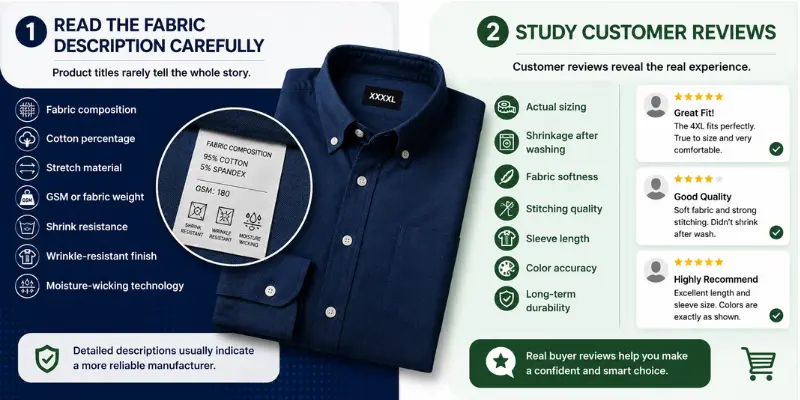
Read the Fabric Description Carefully
Product titles rarely tell the whole story.
Open the product specifications and look for details such as:
- Fabric composition
- Cotton percentage
- Stretch material
- GSM or fabric weight
- Shrink resistance
- Wrinkle-resistant finish
- Moisture-wicking technology
Detailed descriptions usually indicate a more reliable manufacturer.
Study Customer Reviews
Customer reviews often reveal information that product descriptions leave out.
Look for comments about:
- Actual sizing
- Shrinkage after washing
- Fabric softness
- Stitching quality
- Sleeve length
- Color accuracy
- Long-term durability
If several buyers mention the same issue, there’s a good chance you’ll experience it too.
Check Product Photos Carefully
High-quality product photos provide valuable clues.
Zoom in and inspect:
- Collar construction
- Button stitching
- Side seams
- Fabric texture
- Pocket alignment
- Sleeve finish
- Overall fit on the model
Blurry images or heavily edited photos may hide quality problems.
Understand Return and Exchange Policies
Even with careful measurements, sizing differences can happen.
Before buying, confirm:
- Return period
- Exchange availability
- Refund process
- Return shipping costs
- Condition requirements
A flexible return policy gives you more confidence when trying a new brand.
Red Flags When Shopping Online
Avoid products showing these warning signs:
- No size chart
- Generic product descriptions
- Extremely low prices compared to similar shirts
- No customer reviews
- Poor-quality images
- No fabric information
- Missing return policy
- Confusing measurements
- Stock photos only
Reliable sellers usually provide complete product information.
Premium vs Budget XXXXL Shirts
Higher prices don’t always guarantee better quality, but premium shirts often include features that improve comfort and durability.
| Feature | Budget Shirt | Premium Shirt |
| Fabric | Basic cotton blend | Premium cotton or performance fabric |
| Stitching | Single stitch | Double or reinforced stitching |
| Buttons | Plastic | Resin, shell, or reinforced buttons |
| Collar | Soft, loses shape | Structured and durable |
| Fit | Basic grading | Big & Tall pattern |
| Shrinkage | Higher | Lower |
| Lifespan | 6–12 months | 2–5 years with proper care |
If you wear the shirt frequently, investing in better quality usually saves money over time.
Features That Indicate a High-Quality Shirt
Premium shirts share several construction details.
Look for:
Double-Stitched Seams
Double stitching increases durability and reduces seam failure.
Reinforced Shoulder Yoke
The yoke supports the shirt across the shoulders, improving comfort and helping it keep its shape.
Clean Placket Construction
A straight placket allows buttons to align properly and prevents twisting after washing.
Strong Button Attachment
Buttons should be stitched tightly with reinforced thread.
Loose buttons often indicate lower manufacturing standards.
Even Stitch Length
Quality shirts use consistent stitching throughout the garment.
Uneven stitches may weaken the seams over time.
Smooth Fabric Finish
Inspect the surface for:
- Loose fibers
- Uneven weaving
- Fabric defects
- Color inconsistencies
Premium fabric should feel smooth and consistent.
Understanding Shirt Buttons
Buttons may seem like a small detail, but they affect durability.
Common button materials include:
Plastic
Affordable and widely used.
Quality varies significantly.
Resin
More durable than standard plastic.
Resists cracking and maintains a polished appearance.
Shell Buttons
Made from natural shell.
Often found on premium dress shirts.
Elegant but require careful handling.
Metal Buttons
Typically used on denim and overshirts.
Very durable but less common on formal shirts.
Pocket Styles
Different pocket styles create different looks.
No Pocket
Creates a cleaner appearance.
Best for formal shirts.
Single Pocket
The most versatile option.
Suitable for work and casual wear.
Double Pocket
Common on utility, workwear, and outdoor shirts.
Adds functionality while creating a rugged style.
Shirt Length Guide
Length matters more than many buyers realize.
Untucked Shirts
The hem should finish around the middle of your zipper.
Too long looks oversized.
Too short rides up while moving.
Tucked Shirts
The shirt should remain tucked while sitting, walking, and reaching overhead.
Longer tails help keep everything in place.
Why Shirts Shrink
Shrinkage happens because natural fibers tighten during washing and drying.
Heat speeds up this process.
Cotton shirts usually shrink the most during the first wash.
Approximate shrinkage:
| Fabric | Expected Shrinkage |
| Cotton | 2–5% |
| Linen | 3–5% |
| Cotton Blend | 1–3% |
| Polyester Blend | Less than 1% |
Pre-shrunk garments reduce this issue but don’t eliminate it completely.
Washing Your XXXXL Shirt Properly
Good washing habits keep shirts looking new for much longer.
Before Washing
- Empty pockets.
- Fasten buttons.
- Turn the shirt inside out.
- Separate light and dark colors.
Water Temperature
Cold or lukewarm water is usually safest.
Hot water may cause:
- Shrinkage
- Color fading
- Fabric damage
Detergent
Use a mild detergent.
Avoid excessive amounts, as detergent residue can remain in the fabric.
Drying Tips
Air drying remains the safest option.
If using a dryer:
- Select low heat.
- Remove the shirt while slightly damp.
- Hang immediately to reduce wrinkles.
Avoid prolonged high heat.
Ironing Guide
Iron according to the fabric type.
Cotton
Medium to high heat.
Linen
High heat with steam.
Polyester Blends
Low heat.
Printed Shirts
Iron inside out to protect the print.
Embroidered Shirts
Never iron directly over embroidery.
Use a pressing cloth if needed.
Removing Common Stains
Act quickly for the best results.
Food Stains
Rinse with cold water before washing.
Oil Stains
Apply a small amount of dish soap before laundering.
Sweat Marks
Use a gentle stain remover before washing.
Ink
Blot gently instead of rubbing.
Test any cleaning solution on a hidden area first.
Proper Storage
Correct storage extends the life of every shirt.
Hanging
Use wide wooden or padded hangers.
Thin wire hangers may distort the shoulders.
Folding
Fold heavy casual shirts neatly to reduce stretching.
Storage Area
Store shirts in a cool, dry place.
Avoid damp wardrobes, which may encourage mildew.
Sustainable Fabric Choices
Many brands now offer environmentally responsible options.
Popular sustainable materials include:
- Organic cotton
- Recycled polyester
- Hemp blends
- TENCEL™ Lyocell
- Bamboo viscose blends
These fabrics often require less water and fewer chemicals during production.
Common Buying Mistakes
Even experienced shoppers make avoidable mistakes.
Don’t:
- Buy based only on the size label.
- Ignore shoulder measurements.
- Choose the cheapest option available.
- Skip customer reviews.
- Assume all 4XL shirts fit the same.
- Ignore fabric composition.
- Wash new shirts in hot water.
- Dry cotton shirts on maximum heat.
- Choose fashion over comfort.
- Purchase without checking the return policy.
Avoiding these mistakes can save money and help you build a wardrobe filled with shirts that fit well, last longer, and stay comfortable after repeated wear.
Best XXXXL Shirt Brands: What to Look For
You don’t need the most expensive brand to get a great XXXXL shirt. What matters is whether the company designs specifically for larger body types instead of simply increasing the measurements of smaller sizes.
The best brands usually share these features:
- Dedicated Big & Tall collections
- Accurate size charts
- Consistent sizing
- Premium fabrics
- Reinforced stitching
- Extended sleeve lengths
- Longer shirt tails
- Comfortable armholes
- Better quality control
Rather than focusing only on the logo, compare fabric quality, construction, customer reviews, and fit consistency before making a purchase.
Should You Buy a Big & Tall Shirt or a Standard XXXXL Shirt?
Many shoppers are unsure which option suits them better.
Choose a Standard XXXXL Shirt If:
- You have a broader chest.
- Your height is average.
- Standard shirt lengths fit comfortably.
- Sleeve length is rarely an issue.
Choose Big & Tall If:
- You’re over 6 feet tall.
- Regular shirts become untucked easily.
- Sleeves often feel short.
- Your shoulders are broad.
- You need extra room through the upper body.
Big & Tall shirts are designed with body proportions in mind, making them a better choice for taller individuals.
Building a Wardrobe with XXXXL Shirts
A versatile wardrobe doesn’t require dozens of shirts. A carefully chosen collection can cover almost every occasion.
Everyday Basics
Keep these colors on hand:
- White
- Black
- Navy
- Light Blue
- Gray
These shades pair well with jeans, chinos, or dress pants.
Casual Collection
For weekends and everyday wear, include:
- Oxford shirts
- Chambray shirts
- Printed shirts
- Checked shirts
- Polo shirts
These styles offer comfort without sacrificing appearance.
Professional Collection
For office environments or business meetings, choose:
- White dress shirts
- Light blue shirts
- Fine stripe shirts
- Poplin shirts
- Twill shirts
Neutral colors create a polished and professional look.
Special Occasion Collection
Formal events call for higher-quality fabrics and refined details.
Recommended choices include:
- Premium cotton dress shirts
- French cuff shirts
- Spread collar shirts
- Embroidered shirts for cultural celebrations
- Solid colors with minimal patterns
Styling an XXXXL Shirt for Different Occasions
The same shirt can create very different looks depending on how you style it.
Office Wear
Pair your shirt with:
- Dress trousers
- Leather belt
- Formal shoes
- Simple wristwatch
Stick with solid colors or subtle stripes for a clean appearance.
Business Casual
Combine your shirt with:
- Chinos
- Loafers
- Lightweight blazer
- Brown leather accessories
Leave the top button open for a relaxed but professional style.
Casual Outings
For shopping, coffee, or weekend activities:
- Roll the sleeves neatly.
- Pair with jeans or shorts.
- Wear clean sneakers or casual loafers.
- Choose breathable fabrics in warmer weather.
Weddings and Formal Events
A crisp dress shirt paired with tailored trousers creates a timeless outfit.
Choose:
- White
- Ivory
- Light Blue
- Soft Gray
Complete the outfit with polished shoes and a matching belt.
Travel
Comfort matters most while traveling.
Look for shirts that are:
- Lightweight
- Wrinkle resistant
- Breathable
- Stretchable
- Easy to wash
Neutral colors also make packing easier because they match multiple outfits.
Accessories That Pair Well with XXXXL Shirts
The right accessories complete your outfit without drawing attention away from it.
Popular choices include:
- Leather belts
- Stainless steel watches
- Minimal bracelets
- Sunglasses
- Casual caps
- Lightweight scarves during colder months
Keep accessories simple for a balanced appearance.
Common Myths About XXXXL Shirts
Many misconceptions still exist about larger clothing sizes.
Myth 1: Bigger Shirts Should Always Be Loose
Reality: A properly fitted shirt should allow movement without looking oversized.
Myth 2: Dark Colors Are the Only Good Choice
Reality: Navy, olive, burgundy, forest green, and lighter shades like sky blue can also look excellent when the fit is right.
Myth 3: Polyester Always Means Poor Quality
Reality: Modern performance blends with a small percentage of polyester can improve wrinkle resistance and durability.
Myth 4: Expensive Means Better
Reality: Construction quality, fabric, and fit matter far more than price alone.
Myth 5: One Brand’s XXXXL Fits Every Brand
Reality: Every manufacturer follows different grading standards.
Always compare measurements before buying.
Expert Tips Before Buying Your Next XXXXL Shirt
Keep these practical tips in mind every time you shop:
- Measure yourself every few months.
- Save your measurements on your phone for quick reference.
- Buy one shirt first before placing a larger order from a new brand.
- Wash new shirts according to the care label.
- Avoid high dryer temperatures.
- Read verified customer reviews.
- Compare fabric composition, not just appearance.
- Invest in versatile colors before buying bold patterns.
- Choose quality over quantity.
- Replace worn shirts before collars and cuffs become permanently damaged.
Frequently Asked Questions About XXXXL Shirts
Is XXXXL the same as 4XL?
Yes. Most clothing brands use these labels interchangeably, although the exact measurements can vary between manufacturers.
What chest size fits an XXXXL shirt?
Most XXXXL shirts fit chest measurements between 50 and 54 inches (127–137 cm), but always verify the brand’s size chart.
Can an XXXXL shirt shrink after washing?
Yes. Cotton shirts may shrink by 2–5%, especially during the first wash if exposed to hot water or high dryer temperatures.
Which fabric is best for hot weather?
Cotton, linen, cotton-linen blends, and lightweight poplin provide excellent breathability during warm weather.
Which fabric lasts the longest?
High-quality Oxford cloth, twill, and premium combed cotton generally offer the best long-term durability.
Are stretch shirts worth buying?
Yes. A small amount of elastane improves comfort, flexibility, and freedom of movement without changing the overall appearance.
Should I buy one size larger?
Only if the size chart suggests it. Never assume sizing is identical across brands.
Why do buttons pull across the chest?
This usually indicates that the shirt is too small in the chest or that the cut isn’t designed for broader body proportions.
Final Buying Checklist
Before clicking Buy Now, make sure you’ve completed every step below.
✔ Measured your chest, shoulders, neck, sleeves, and shirt length.
✔ Compared your measurements with the brand’s size chart.
✔ Chosen the right fabric for your climate.
✔ Checked the fit type (Regular, Relaxed, Classic, or Big & Tall).
✔ Read verified customer reviews.
✔ Reviewed the return and exchange policy.
✔ Confirmed the shirt length and sleeve length.
✔ Checked fabric composition.
✔ Looked for reinforced stitching and quality construction.
✔ Selected colors that match your existing wardrobe.
Final Thoughts
Finding the perfect XXXXL shirt is no longer as difficult as it once was. Clothing brands now offer better fits, improved fabrics, and collections created specifically for larger body types. The key is to look beyond the size label and focus on measurements, construction quality, fabric performance, and overall fit.
A well-made shirt should feel comfortable from morning to evening, allow easy movement, and maintain its shape after repeated washing. Whether you’re shopping for work, casual weekends, travel, or formal occasions, choosing the right fabric, fit, and design will make a noticeable difference in both comfort and appearance.
Take your measurements regularly, compare size charts carefully, and invest in quality pieces that suit your lifestyle. A thoughtfully chosen wardrobe of well-fitting XXXXL shirts will serve you for years, giving you confidence and comfort every time you get dressed.
