


Finding a dress that fits well should feel exciting, but for many shorter women, it often becomes frustrating. A regular dress may look beautiful on the hanger, yet the waist sits too low, the sleeves cover your hands, or the hem drags across the floor. These small fit problems can completely change how a dress looks and feels.
That is exactly why a petite dress matters. It is made for women who are 5 feet 3 inches (160 cm) and under, with every measurement adjusted to match a shorter frame. Instead of simply shortening the hem, designers reshape the shoulders, waist, sleeves, and overall proportions to create a balanced look.
Whether you are shopping for work, a wedding, a holiday, or everyday wear, choosing the right petite dress makes getting dressed much easier. This guide covers everything you need to know, from sizing and measurements to styles, fabrics, and shopping tips, so you can confidently find a dress that feels like it was made for you.
What Is a Petite Dress?
A petite dress is clothing specially made for women with a height of 5’3″ (160 cm) or below. Many people think petite means being slim or wearing a small size, but that is a common misunderstanding. Petite sizing is based on height, not body shape or weight.
You can wear a UK size 6, 12, 18, or even larger and still need petite clothing if your height falls within the petite range.
Unlike a standard dress, a petite dress is adjusted from top to bottom. Every important measurement is resized to create better balance and comfort.
Key Features of a Petite Dress
A quality petite dress usually includes:
- Shorter shoulder width
- Higher waist placement
- Reduced torso length
- Correct bust position
- Shorter sleeves
- Better armhole placement
- Proper skirt length
- Balanced overall proportions
These adjustments help the dress sit naturally on your body instead of looking oversized.
Petite Dress vs Regular Dress
Many shoppers wonder whether they can simply shorten a regular dress instead of buying a petite version. While hemming can fix the length, it cannot change the overall proportions.
| Feature | Petite Dress | Regular Dress |
| Designed Height | Up to 5’3″ | Around 5’6″–5’9″ |
| Waist Position | Higher | Lower |
| Shoulder Width | Narrower | Wider |
| Sleeve Length | Shorter | Longer |
| Torso Length | Shorter | Longer |
| Hem Length | Correctly Balanced | Often Too Long |
This is why a petite dress usually looks more natural without expensive tailoring.
Why Wearing the Right Proportions Matters
Good style is not about looking taller. It is about wearing clothes that fit your body correctly.
When the proportions are right:
- Your waist appears in the correct place.
- The skirt flows naturally.
- Sleeves stop at your wrists.
- The neckline sits comfortably.
- Your overall outfit looks cleaner and more polished.
Instead of adjusting your clothing, your clothing works with your body.
Who Should Wear a Petite Dress?
Petite clothing is ideal for women who are:
- 5’3″ (160 cm) or shorter
- Short-waisted
- Small-framed
- Looking for better overall proportions
- Tired of paying for alterations
Even women who are slightly taller may enjoy petite sizing if they have a shorter torso or prefer shorter dress lengths.
Does Petite Mean Small?
No.
This is one of the biggest myths in fashion.
Petite refers only to height. It has nothing to do with your body weight or clothing size.
For example:
- A woman who is 5’1″ and wears a size 18 can wear a petite dress.
- A woman who is 5’2″ and wears a size 8 also wears petite sizing.
- A woman who is 5’7″ wearing a size 6 usually needs regular sizing instead.
Always choose your clothing based on both height and measurements.
How to Measure Yourself Before Buying a Petite Dress
Knowing your measurements helps you choose the right size, especially when shopping online.
Height
Stand against a wall without shoes and measure from the floor to the top of your head.
Bust
Wrap a measuring tape around the fullest part of your bust while keeping it level.
Waist
Measure around your natural waist, which is usually the narrowest part of your torso.
Hips
Measure around the fullest part of your hips while standing naturally.
Shoulder Width
Measure from one shoulder edge to the other across your back.
Dress Length
Measure from the highest point of your shoulder to the length where you want your dress to end.
Keep these measurements saved on your phone so you can compare them with brand size charts before ordering.
How to Choose the Right Petite Size
Different brands use different measurements, so never rely only on the size number.
Before buying, always:
- Compare your measurements with the brand’s size chart.
- Read customer reviews for sizing advice.
- Check whether the fabric stretches.
- Look at the model’s height.
- Read product descriptions carefully.
If you are between two sizes, consider the fabric. Stretch fabrics usually allow you to size down, while structured fabrics often require the larger size.
Common Petite Dress Sizes
Although sizing varies by brand, most petite collections include:
| UK Size | US Size | Typical Fit |
| 6 | 2 | Extra Small |
| 8 | 4 | Small |
| 10 | 6 | Small-Medium |
| 12 | 8 | Medium |
| 14 | 10 | Medium-Large |
| 16 | 12 | Large |
| 18 | 14 | Extra Large |
Always treat this as a guide rather than an exact rule.
Signs That a Dress Is Truly Petite
Many stores label dresses as “short” without changing the overall design. A true petite dress has several features working together.
Look for these signs:
- The waist sits exactly at your natural waist.
- The shoulder seams line up correctly.
- Sleeves end at your wrist.
- The bust darts sit in the right place.
- The skirt length looks balanced.
- The dress does not bunch around your hips.
If several of these details are missing, it may simply be a regular dress with a shorter hem.
Shopping Tips Before Buying a Petite Dress
A few extra minutes can save you from buying the wrong dress.
Before adding an item to your cart:
✔ Check the complete size chart.
✔ Read recent customer reviews.
✔ Look for photos shared by buyers.
✔ Compare your measurements.
✔ Check the return policy.
✔ Read fabric details.
✔ Confirm whether the dress is part of the petite collection.
These simple steps reduce the chances of ordering a dress that does not fit properly.
What’s Coming Next
In the next part of this guide, you’ll learn how to choose the best petite dress styles for every body shape. We’ll also cover mini, midi, maxi, wrap, shirt, bodycon, and A-line dresses, along with the best necklines, sleeve styles, fabrics, and colors that create balanced proportions.
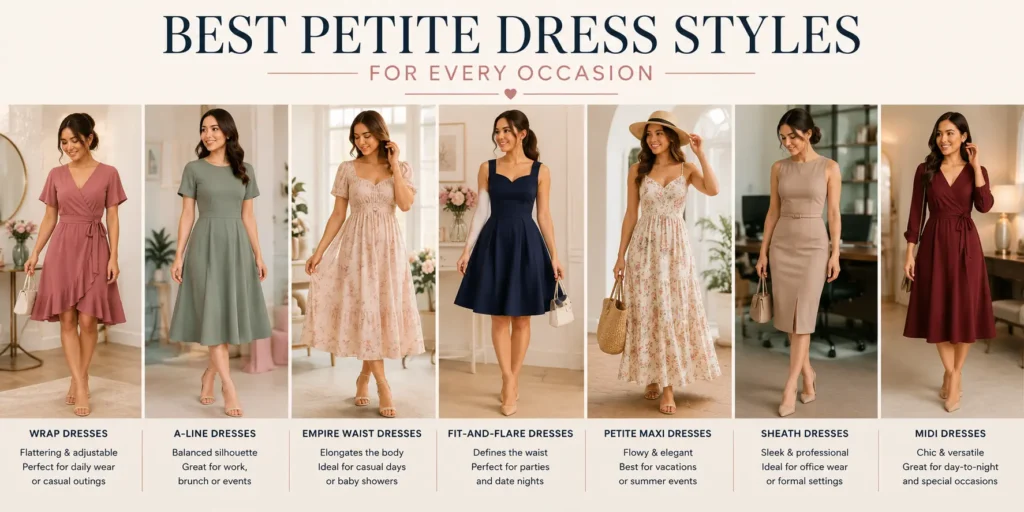
Best Petite Dress Styles for Every Occasion
The right dress style can completely change how an outfit looks on a petite frame. While every woman has her own personal style, some dress designs naturally create balanced proportions and help your figure look more defined.
Instead of following every fashion trend, focus on silhouettes that fit well and highlight your natural shape. Below are the most flattering petite dress styles and when to wear them.
Mini Petite Dress
A mini petite dress sits above the knee and is one of the easiest styles for shorter women to wear. Showing more of your legs creates the illusion of extra height without relying on high heels.
Mini dresses work well for:
- Weekend outings
- Casual lunches
- Summer holidays
- Shopping trips
- Date nights
Styling Tips
- Choose a fitted waist for better definition.
- Pair with white sneakers for a casual outfit.
- Wear nude heels for a dressier look.
- Avoid oversized jackets that hide your proportions.
Midi Petite Dress
Many petite women avoid midi dresses because regular versions often fall too low. A true petite midi dress is shorter and usually ends between the knee and mid-calf, making it much more flattering.
Perfect for:
- Office wear
- Garden parties
- Wedding guests
- Brunch
- Family gatherings
Styling Tips
- Look for side slits to create movement.
- A-line and wrap styles work best.
- Pointed-toe shoes help lengthen the legs.
- Keep accessories simple for a polished finish.
Maxi Petite Dress
Many people believe petite women cannot wear maxi dresses, but that is simply not true. The secret is choosing a petite-specific length with a well-defined waist.
A maxi petite dress looks beautiful for:
- Beach vacations
- Evening events
- Summer weddings
- Outdoor celebrations
Choose These Features
- Empire waist
- Wrap front
- Lightweight fabric
- Vertical prints
- Side slit
Avoid heavy skirts with too much volume, as they can overwhelm a smaller frame.
Wrap Petite Dress
A wrap dress remains one of the most flattering choices for almost every petite woman.
Its diagonal neckline naturally draws attention upward while the adjustable waist creates shape without feeling tight.
Best for:
- Office outfits
- Dinner dates
- Weddings
- Everyday wear
Shirt Petite Dress
A shirt dress offers a smart and timeless appearance.
Wear it with:
- Trainers for casual outfits.
- Loafers for work.
- Sandals during summer.
- Ankle boots in autumn.
Adding a slim belt creates a more balanced silhouette.
Bodycon Petite Dress
Bodycon dresses follow your natural shape and create long, clean lines.
Look for:
- Vertical seams
- Stretch fabric
- Knee-length designs
- Simple patterns
Avoid oversized accessories that compete with the fitted silhouette.
A-Line Petite Dress
An A-line dress gently widens from the waist without adding bulk.
This style works especially well for women who want extra balance around the hips.
Suitable for:
- Work
- Parties
- Everyday outfits
- Weddings
Best Petite Dress for Every Body Shape
Every body shape benefits from different dress details. Choosing the right silhouette helps create balanced proportions while highlighting your best features.
Pear Shape
Women with pear-shaped bodies have wider hips than shoulders.
Best styles include:
- Wrap dresses
- A-line dresses
- Fit-and-flare styles
- Dresses with detailed necklines
These styles balance the upper and lower body beautifully.
Apple Shape
Apple-shaped women usually carry more weight around the waist.
Choose:
- Empire waist dresses
- V-neck dresses
- Shift dresses
- Wrap dresses
Avoid tight belts placed across the stomach.
Hourglass Shape
An hourglass figure has balanced shoulders and hips with a defined waist.
Best choices include:
- Bodycon dresses
- Wrap dresses
- Pencil dresses
- Belted shirt dresses
These styles highlight natural curves.
Rectangle Shape
If your shoulders, waist, and hips are similar in width, focus on creating shape.
Choose:
- Peplum dresses
- Belted dresses
- Fit-and-flare styles
- Ruffle sleeve dresses
These create more definition around the waist.
Inverted Triangle Shape
Women with broader shoulders should balance the lower body.
Good options include:
- A-line skirts
- Flared dresses
- V-necklines
- Soft fabrics
Avoid large shoulder details or puff sleeves.
Best Necklines for Petite Women
The neckline changes how your upper body appears.
V-Neck
The most flattering option.
Benefits:
- Makes the neck appear longer.
- Creates vertical lines.
- Looks elegant on every body shape.
Sweetheart Neckline
Perfect for weddings and special occasions.
Works well for:
- Pear shapes
- Hourglass figures
- Smaller busts
Scoop Neck
A timeless choice that softens the upper body while keeping the outfit balanced.
Square Neck
Creates a structured appearance while drawing attention upward.
Looks beautiful with:
- Puff sleeves
- A-line dresses
- Midi dresses
Boat Neck
Suitable for women with narrow shoulders because it creates visual width across the upper body.
High Neck
Although stylish, high necklines can shorten the appearance of the neck.
If you love this style, choose:
- Shorter hemlines
- Fitted silhouettes
- Simple accessories
Which Sleeve Style Looks Best on Petite Women?
Sleeves have a bigger impact than many people realize.
Sleeveless
The easiest option for creating a longer arm line.
Perfect for summer and layering.
Cap Sleeves
Add a feminine touch without making the shoulders look wider.
Three-Quarter Sleeves
One of the most flattering sleeve lengths because they reveal the wrists and create a lighter appearance.
Long Sleeves
Look best when properly tailored.
The sleeve should end exactly at the wrist.
Puff Sleeves
Small puff sleeves work well.
Oversized puff sleeves can overpower a petite frame.
Bell Sleeves
Choose subtle bell sleeves instead of dramatic designs.
Too much volume can make your arms appear shorter.
The Best Fabrics for a Petite Dress
Fabric changes how a dress hangs, moves, and feels.
Jersey
Soft, stretchy, and comfortable.
Perfect for:
- Wrap dresses
- Casual outfits
- Everyday wear
Cotton
Breathable and easy to maintain.
Ideal for:
- Summer dresses
- Shirt dresses
- Casual styles
Linen
Lightweight and naturally textured.
Best for warm weather and vacation outfits.
Chiffon
Flows beautifully without adding unnecessary weight.
Excellent for:
- Maxi dresses
- Wedding guest dresses
- Evening wear
Satin
Offers an elegant drape for formal occasions.
Matte satin usually looks more refined than very shiny fabrics.
Knit Fabric
Perfect during colder months.
A knit petite dress provides comfort while keeping a clean silhouette.
Fabrics to Avoid
Some materials can make petite women appear shorter.
These include:
- Thick jacquard
- Heavy brocade
- Stiff tulle
- Bulky layered ruffles
- Very heavy velvet
Choose lighter fabrics whenever possible.
Best Colors and Prints for Petite Women
Color also affects visual proportions.
Wear Monochrome Outfits
Dressing in one color from head to toe creates one continuous line, making you appear taller.
Choose Vertical Stripes
Vertical stripes naturally draw the eyes upward and downward.
Thin stripes usually work better than bold ones.
Wear Small Prints
Small florals, delicate dots, and subtle patterns suit petite frames better than oversized prints.
Try Tonal Colors
Colors that are close together create a smoother appearance.
Examples include:
- Beige with cream
- Navy with light blue
- Olive with sage green
Avoid Large Color Blocks
Strong horizontal color changes across the waist can visually shorten the body.
Instead, choose dresses with one dominant color.
Quick Style Checklist
Before buying your next petite dress, ask yourself:
✔ Does the waist sit naturally?
✔ Are the shoulders aligned correctly?
✔ Is the fabric lightweight enough?
✔ Does the neckline suit your body shape?
✔ Are the sleeves the right length?
✔ Does the dress create balanced proportions?
If the answer is yes to most of these questions, you are likely choosing a dress that will fit and flatter your frame beautifully.
How to Style a Petite Dress for Every Occasion
Choosing the right dress is only the first step. The way you style it can make an even bigger difference. Shoes, accessories, layering pieces, and even your hairstyle all work together to create a balanced outfit.
This section will help you build outfits that feel comfortable, stylish, and suitable for every occasion.
Petite Dress for Work
A professional outfit should look clean, polished, and comfortable enough for a full day.
Best Dress Styles
- Shirt dress
- Sheath dress
- Wrap dress
- A-line midi dress
Best Colors
- Navy
- Black
- Charcoal
- Olive
- Burgundy
- Beige
Complete Office Outfit
- Knee-length petite dress
- Blazer with structured shoulders
- Pointed-toe flats
- Leather tote bag
- Minimal jewelry
Avoid oversized blazers that hide your waist.
Petite Dress for Weddings
Wedding guest outfits should feel elegant without taking attention away from the bride.
Great Choices
- Floral midi dress
- Wrap dress
- Chiffon maxi dress
- Satin slip dress
Colors That Work Well
- Emerald green
- Dusty blue
- Lavender
- Sage green
- Rose pink
- Burgundy
Avoid white, ivory, cream, and champagne unless the dress code allows them.
Petite Dress for Parties
Party outfits are a chance to wear bold colors and statement accessories.
Popular options include:
- Mini bodycon dress
- Sequin dress
- Satin mini dress
- One-shoulder dress
Complete the outfit with:
- Strappy heels
- Small clutch bag
- Hoop earrings
- Soft curls or a sleek ponytail
Petite Dress for Summer
Summer clothing should keep you cool while still looking stylish.
Choose fabrics like:
- Cotton
- Linen
- Rayon
- Lightweight jersey
Best styles include:
- Sundresses
- Wrap dresses
- Shirt dresses
- Sleeveless midi dresses
Pair with flat sandals, sunglasses, and a woven handbag.
Petite Dress for Winter
Cold weather does not mean putting dresses away.
Layer your outfit with:
- Long tailored coat
- Wool blazer
- Knit cardigan
- Opaque tights
- Knee-high boots
Knitted midi dresses are an excellent choice because they provide warmth while keeping your silhouette neat.
Petite Dress for Spring
Spring is perfect for fresh colors and lightweight layers.
Popular choices include:
- Floral wrap dresses
- Pastel shirt dresses
- Light knit dresses
Layer with:
- Denim jacket
- Cropped cardigan
- White sneakers
Petite Dress for Autumn
Autumn outfits combine comfort with seasonal colors.
Choose shades like:
- Rust
- Camel
- Chocolate brown
- Forest green
- Deep burgundy
Complete the look with ankle boots and a lightweight trench coat.
Petite Dress for Date Night
For a romantic evening, choose dresses that feel elegant without being uncomfortable.
Best options include:
- Satin slip dress
- Wrap dress
- Off-the-shoulder dress
- Midi bodycon dress
Accessories should stay simple so the dress remains the focus.
Petite Dress for Vacation
Vacation outfits should be easy to pack and comfortable to wear all day.
Pack dresses that:
- Resist wrinkles
- Dry quickly
- Match several pairs of shoes
- Work for both day and evening
A lightweight wrap dress is one of the most versatile travel pieces you can own.
Best Shoes to Wear with a Petite Dress
Shoes can completely change how your outfit looks.
Pointed-Toe Pumps
One of the most flattering options.
They naturally create the illusion of longer legs.
Nude Heels
Choose a shade close to your skin tone.
This creates one continuous line from your legs to your feet.
White Sneakers
Perfect for:
- Shirt dresses
- Mini dresses
- Casual midi dresses
They offer comfort without sacrificing style.
Ballet Flats
Comfortable and timeless.
Choose pointed styles instead of round-toe designs if you want a slightly longer-looking foot.
Block Heels
Ideal when you need extra height without sacrificing comfort.
Great for weddings and office wear.
Knee-High Boots
These pair beautifully with mini and sweater dresses during colder months.
Accessories That Complete a Petite Outfit
Accessories should enhance your outfit rather than overpower it.
Handbags
Choose:
- Crossbody bags
- Small shoulder bags
- Structured handbags
- Mini totes
Avoid oversized bags that can make your frame appear smaller.
Belts
A slim belt placed at your natural waist creates better proportions.
Avoid very wide belts unless the dress is simple and fitted.
Jewelry
Simple jewelry usually works best.
Good choices include:
- Small hoops
- Pendant necklaces
- Stud earrings
- Thin bracelets
Avoid wearing several oversized pieces together.
Hats
For sunny days, choose:
- Straw hats
- Panama hats
- Small fedoras
Large floppy hats may overwhelm a petite frame.
Scarves
Light scarves add color without adding bulk.
Tie them loosely for a relaxed appearance.
Hairstyles That Pair Beautifully with Petite Dresses
Hair also affects your overall proportions.
Popular styles include:
- Half-up hairstyle
- Low ponytail
- Soft waves
- Short bob
- Shoulder-length layers
These styles help show your neckline and keep the outfit balanced.
Common Petite Dress Mistakes to Avoid
Even beautiful dresses can look unbalanced if they are styled incorrectly.
Buying Regular Sizes Without Checking Measurements
A shorter hem does not automatically create a better fit.
Wearing Oversized Prints
Large prints can dominate a petite frame.
Choose smaller patterns instead.
Choosing Very Heavy Fabrics
Bulky fabrics add unnecessary volume.
Lightweight materials usually look more flattering.
Wearing Extra-Wide Belts
Wide belts divide your body into shorter sections.
Slim belts are usually the better choice.
Ignoring Sleeve Length
Sleeves that cover your hands make your arms appear shorter.
Always check sleeve measurements.
Wearing Oversized Bags
Very large handbags often look out of proportion.
Medium or small bags create better balance.
Choosing the Wrong Shoe Color
Dark shoes with light skin can visually shorten the legs.
Nude shoes often create a longer appearance.
Petite Dress Buying Checklist
Before purchasing any dress, go through this checklist.
✔ Confirm it belongs to the petite collection.
✔ Compare your body measurements.
✔ Check shoulder width.
✔ Read customer reviews.
✔ Look at the model’s height.
✔ Check fabric composition.
✔ Confirm dress length.
✔ Review return and exchange policies.
✔ Look at customer photos.
✔ Make sure it matches items already in your wardrobe.
These simple steps can help you avoid costly returns.
Best Petite Dress Brands
Many fashion brands now offer dedicated petite collections with better proportions and a wide range of styles.
Some of the most popular options include:
- ASOS Petite
- Petite Studio
- Next Petite
- Ann Taylor Petite
- Banana Republic Petite
- J.Crew Petite
- Boden Petite
- Reformation Petite
- Karen Millen Petite
- Boohoo Petite
- Dorothy Perkins Petite
- New Look Petite
Each brand offers slightly different sizing, so always compare measurements before ordering.
Quick Outfit Ideas
| Occasion | Dress Style | Shoes | Accessories |
| Office | Shirt Dress | Pointed Flats | Tote Bag |
| Wedding | Floral Midi | Block Heels | Clutch |
| Date Night | Wrap Dress | Nude Heels | Pendant Necklace |
| Summer | Linen Dress | Sandals | Straw Bag |
| Winter | Knit Midi | Knee Boots | Wool Coat |
| Vacation | Maxi Dress | Flat Sandals | Sunglasses |
Building a Petite Wardrobe
Instead of buying many dresses you rarely wear, build a collection of versatile pieces.
A practical wardrobe includes:
- One black dress
- One floral midi dress
- One wrap dress
- One shirt dress
- One knit dress
- One maxi dress
- One casual cotton dress
These seven dresses can cover almost every event throughout the year.
How to Care for Your Petite Dress
A well-made petite dress can stay in excellent condition for years if you care for it properly. Good maintenance keeps the fabric looking fresh, prevents shrinking, and helps the dress maintain its original shape.
Read the Care Label
Every fabric requires different care. Cotton, linen, satin, chiffon, and knit materials all have different washing instructions. Always check the care label before cleaning your dress.
Wash Delicate Fabrics Carefully
Lightweight fabrics such as chiffon, satin, lace, and silk should be hand washed or cleaned on a gentle machine cycle with cold water.
Using a mild detergent helps protect delicate fibers and keeps colors looking vibrant.
Avoid High Heat
Hot water and high dryer temperatures can damage fabric and cause shrinkage.
Instead:
- Wash with cold or lukewarm water.
- Air dry whenever possible.
- Avoid over-drying in a tumble dryer.
Steam Instead of Iron
Steam removes wrinkles while protecting delicate fabrics.
If you need to iron your dress, always use the recommended heat setting and iron it inside out whenever possible.
Store Dresses Properly
Storage is just as important as washing.
For the best results:
- Hang dresses on padded hangers.
- Zip delicate dresses before storing.
- Keep garments in breathable cotton bags.
- Avoid plastic covers for long-term storage.
Proper storage helps prevent wrinkles, stretching, and dust buildup.
How to Make Your Petite Dresses Last Longer
Simple habits can extend the life of your wardrobe.
Rotate Your Dresses
Avoid wearing the same dress every week.
Rotating your clothing gives fabrics time to recover and reduces wear.
Repair Small Problems Early
Replace loose buttons, fix small tears, and repair loose stitching before they become larger problems.
Remove Stains Quickly
Treat stains as soon as possible.
The longer a stain remains, the harder it becomes to remove without damaging the fabric.
Fold Knit Dresses
Heavy knit dresses should be folded instead of hung.
Hanging heavy knitwear may stretch the shoulders over time.
Sustainable Petite Fashion
Many fashion brands now focus on creating clothing with less environmental impact.
If sustainability matters to you, look for dresses made from:
- Organic cotton
- Linen
- TENCEL™ Lyocell
- Bamboo fabric
- Recycled polyester
Buying fewer, better-quality dresses often saves money in the long run while reducing clothing waste.
Building a Petite Capsule Wardrobe
A capsule wardrobe helps you create many outfits with fewer pieces.
These seven dresses cover almost every occasion.
| Dress Type | Best For |
| Little Black Dress | Evening events |
| Wrap Dress | Office and dinners |
| Shirt Dress | Everyday wear |
| Floral Midi Dress | Weddings and brunch |
| Knit Dress | Autumn and winter |
| Maxi Dress | Holidays and parties |
| Cotton Sundress | Summer |
Mix these dresses with different shoes, jackets, and accessories to create dozens of outfit combinations.
Petite Dress Trends for 2026
Fashion trends change every year, but many current styles are especially flattering for petite women.
Soft Neutral Colors
Popular shades include:
- Butter yellow
- Sand
- Mocha
- Sage green
- Dusty blue
- Chocolate brown
These colors are easy to style throughout the year.
Relaxed Tailoring
Comfort remains popular, but clothing now has better structure.
Look for:
- Belted shirt dresses
- Relaxed wrap dresses
- Tailored midi dresses
These styles combine comfort with polished proportions.
Floral Prints
Small floral prints continue to be a favorite because they add personality without overwhelming a petite frame.
Textured Fabrics
Light texture adds interest while keeping the outfit elegant.
Popular choices include:
- Linen
- Crochet details
- Cotton blends
- Ribbed knit
Minimalist Style
Clean lines and simple designs remain one of the strongest fashion trends.
A well-fitted dress in a single color often looks more expensive than a heavily decorated design.
Expert Styling Tips
Fashion experts often focus on small details that make a noticeable difference.
Create One Vertical Line
Choose similar colors for your dress, shoes, and outerwear.
This creates a continuous line that gives a taller appearance.
Keep Accessories Balanced
Instead of wearing several bold accessories together, choose one statement piece.
This keeps your outfit looking polished rather than busy.
Tailoring Makes a Difference
Even a high-quality dress can fit better after small alterations.
Adjusting sleeve length or taking in the waist can completely improve how a dress looks.
Confidence Completes Every Outfit
The best dress is the one that makes you feel comfortable and confident.
Good fit matters more than following every fashion trend.
Frequently Asked Questions
What height is considered petite?
Most fashion brands design petite clothing for women who are 5 feet 3 inches (160 cm) or shorter.
Is petite the same as small?
No. Petite describes height, while clothing size describes body measurements.
Can taller women wear petite dresses?
Yes. Women with shorter torsos or those who prefer shorter dress lengths may still enjoy petite sizing.
Which dress length makes petite women look taller?
Mini and knee-length dresses often create the longest visual line, although a properly fitted petite maxi dress can also look elegant.
Are petite dresses worth buying?
Yes. A true petite dress improves shoulder fit, waist placement, sleeve length, and overall proportions, reducing the need for alterations.
Can petite women wear maxi dresses?
Absolutely.
Choose petite-specific lengths, lightweight fabrics, and a defined waist for the most flattering result.
Which neckline is best for petite women?
V-neck, scoop neck, sweetheart, and square necklines all help create a balanced appearance.
What shoes make petite women look taller?
Pointed-toe pumps, nude heels, and shoes that closely match your skin tone create the illusion of longer legs.
Can petite women wear oversized dresses?
Yes, but balance is important.
Choose oversized styles with a defined waist or structured silhouette so your frame is not overwhelmed.
Which fabrics are best for petite dresses?
Cotton, linen, jersey, chiffon, satin, and lightweight knit fabrics are excellent choices because they drape naturally without adding unnecessary bulk.
Where can I buy quality petite dresses?
Many trusted brands offer dedicated petite collections, including ASOS Petite, Petite Studio, Next Petite, Reformation, J.Crew, Ann Taylor, Banana Republic, and Boden.
How do I know if a dress is truly petite?
A genuine petite dress has adjusted shoulders, waist placement, sleeve length, torso length, and skirt proportions. If only the hem is shorter, it may simply be a regular dress that has been altered.
Final Thoughts
Finding the perfect petite dress is about much more than choosing a shorter hemline. A dress designed specifically for a petite frame provides better balance, improved comfort, and a more flattering fit from shoulder to hem.
Whether you are shopping for work, weddings, holidays, or everyday wear, taking time to understand sizing, body shape, fabrics, and styling can help you make better choices. Small details such as neckline, sleeve length, shoe selection, and accessories also play an important role in creating a polished outfit.
Instead of settling for dresses that almost fit, invest in styles made for your height and proportions. A well-fitted petite dress will look better, feel more comfortable, and remain a valuable part of your wardrobe for years to come.
With the tips in this guide, you can shop with confidence, build a versatile collection of dresses, and enjoy outfits that suit your style, your body, and every occasion.
