


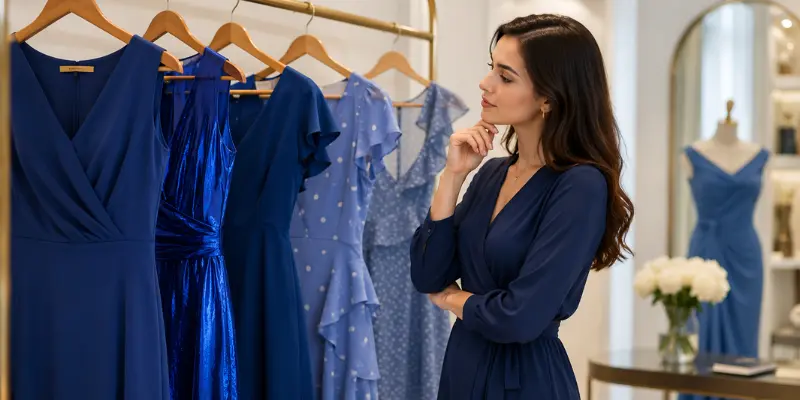
If you’re scrolling through hundreds of dresses and still haven’t found the right shade of blue, you’re not alone. Blue is the most requested color for blue mother of the bride dresses, and for good reason. It’s flattering on nearly every skin tone, it photographs beautifully, and it strikes that hard-to-find balance between elegant and joyful, without competing with the bride’s gown or the bridesmaids’ colors.
This guide goes beyond a simple list of dresses. You’ll find out which blue actually suits your skin tone, how to dress for your specific venue and season, what to avoid, and the details most guides leave out entirely, like how blue photographs under different lighting and what to do if you’re the mother of the groom instead of the bride.
Why Blue Works So Well for Mothers of the Bride
Blue sits in a sweet spot. It reads as formal enough for a black-tie ballroom but soft enough for a backyard or beach wedding. It rarely clashes with floral arrangements, bridal party colors, or wedding themes, since most palettes are built around neutrals, blush, greenery, or metallics, all of which pair naturally with blue.
There’s also a practical reason planners and stylists recommend it so often: blue is one of the few colors that looks good in both daylight and indoor evening lighting. Reds can go orange under warm lighting, and pastels can wash out in photos, but blue tends to hold its true color through the ceremony, the golden-hour photos, and the reception dance floor.
Find Your Shade: A Blue for Every Skin Tone
Most guides list shades of blue without explaining which one actually suits you. Here’s the breakdown by undertone, which matters far more than personal preference alone.
- Warm undertones (golden, peachy, or olive skin): Lean toward teal, French blue, or periwinkle. These shades have just enough warmth mixed in to complement golden skin without looking flat.
- Cool undertones (pink or rosy skin): Navy, royal blue, and slate blue are your best friends. The coolness in these shades echoes your natural undertone instead of fighting it.
- Neutral undertones: You can wear almost any blue, but cobalt and sapphire tend to be the most universally flattering and add a richness that photographs well.
- Deeper skin tones: Jewel tones like sapphire, cobalt, and royal blue create striking contrast and tend to photograph as vivid and rich rather than washed out.
- Fair or light skin tones: Dusty blue and powder blue soften the look beautifully, while navy adds definition without overwhelming.
If you’re unsure of your undertone, check the veins on your wrist in natural light. Blue or purple veins usually mean cool undertones; green veins usually mean warm. If you can’t tell, you likely have a neutral undertone, which means more shades are fair game.
Shades of Blue, Explained
- Navy Blue: The most classic and versatile option. Works for nearly any wedding formality, from courthouse to cathedral.
- Royal Blue: Bold and confident. A strong choice if you want to make a statement without wearing a bright color.
- Dusty Blue: Muted and romantic, a favorite for outdoor, garden, and spring weddings.
- French Blue: A refined mid-tone that works equally well at noon and at night.
- Slate Blue: Soft, gray-tinted blue that feels modern and understated.
- Cobalt and Sapphire: Rich, saturated shades that photograph beautifully and suit deeper skin tones especially well.
- Powder or Light Blue: Airy and gentle, best for daytime, beach, or summer ceremonies.
- Teal: Technically blue-green, but increasingly popular for mothers who want something a little different while staying in the blue family.
Matching Your Dress to the Wedding Venue and Season
This is where most guides fall short. The “best” blue isn’t just about your skin tone; it’s about where and when the wedding is happening.
Beach or destination wedding: Choose lightweight, breathable fabrics like chiffon or crepe in powder blue, dusty blue, or French blue. Avoid heavy beading or structured ball gowns; they don’t hold up well in heat or sand, and they’re uncomfortable for hours outdoors.
Garden or outdoor spring wedding: Dusty blue and slate blue in soft, flowing silhouettes feel right at home. A-line and tea-length dresses move easily on grass and don’t require a long train to manage.
Ballroom or black-tie evening wedding: Navy, sapphire, or royal blue in satin, velvet, or mikado fabric brings the formality the occasion calls for. This is also where you can lean into beading, lace overlays, or a dramatic cape detail.
Winter or indoor formal wedding: Deep, jewel-toned blues like cobalt or navy in velvet or heavier crepe keep you warm and look rich under indoor lighting, which tends to wash out lighter shades.
Religious or traditional ceremony: Navy and slate blue are safe, respectful choices that read as elegant rather than casual, especially with sleeves or a modest neckline.
How Blue Photographs (A Detail Almost No One Mentions)
You’ll be in hundreds of photos, so it’s worth knowing how your color choice behaves in front of a camera.
- Navy and royal blue photograph as rich, true-to-color, and don’t shift much between daylight and flash photography.
- Light and dusty blue can occasionally read as gray or washed out under harsh indoor lighting or heavy flash. If your venue is dimly lit, ask the photographer or planner about the lighting setup beforehand.
- Teal and cobalt tend to “pop” against neutral or beige wedding backdrops, which is great if you want to stand out gracefully in family photos.
- Outdoor golden-hour light flatters almost every shade of blue, making it one of the most forgiving colors for outdoor ceremony photos.
Dress Silhouettes: What Actually Flatters Different Body Types
Color matters, but fit matters more. Here’s a quick-reference guide.
- Hourglass figure: A fitted sheath or wrap dress highlights your waist without adding bulk.
- Pear shape (fuller hips): An A-line dress balances proportions by skimming over the hips while structuring the bodice.
- Apple shape (fuller midsection): Look for empire waistlines or ruched bodices that draw attention upward and away from the midsection.
- Petite frame: Avoid overwhelming fabric or floor-dragging hemlines. Tea-length or midi dresses, paired with a higher waistline, create the illusion of height.
- Plus-size: Structured fabrics like mikado or crepe with strategic ruching offer support and shape without feeling restrictive. Avoid clingy jersey, which can highlight rather than smooth.
- Broad shoulders: A V-neck or sweetheart neckline softens the shoulder line better than a boat neck or halter.
Mother of the Bride vs. Mother of the Groom: Should Your Dresses Match?
This is one of the most common questions, and most guides skip it entirely.
There’s no rule requiring the two mothers to match, but coordinating is considered good etiquette. The easiest approach is to choose complementary shades of blue rather than identical dresses, for example, one in navy and the other in dusty blue. This way, both mothers look intentional and connected without appearing to compete with the bridal party or each other.
A simple way to coordinate without direct communication overload: agree on one shared element, like a similar formality level or a shared accent color (silver, gold, or blush), and then each choose your own shade of blue independently.
What to Avoid When Choosing a Blue Dress
- Matching the bridesmaids too closely. If the bridal party is wearing navy or dusty blue, choose a noticeably different shade or a different fabric finish (satin instead of chiffon, for example) to avoid blending in.
- Overly casual fabrics. Cotton, jersey, or anything that wrinkles easily can look underdressed in photos, even if it’s comfortable.
- Ignoring the dress code. A black-tie wedding calls for floor-length and a more formal fabric; a backyard wedding doesn’t need a cathedral train.
- Sacrificing comfort for style. You’ll be standing, hugging, dancing, and sitting for hours. Try sitting down and raising your arms in the dress before buying it.
- Forgetting about alterations and timing. Order at least 2 to 3 months ahead to allow time for alterations, especially with structured or beaded fabrics.
Accessorizing Your Blue Dress
- Metallics: Gold and silver both work well with blue; gold adds warmth, silver adds a cooler, more formal finish.
- Jewelry: Pearls remain a timeless pairing with navy and slate blue. For brighter blues like cobalt or royal, simple diamond or crystal pieces let the dress color stay the focal point.
- Shoes: Nude or metallic heels elongate the leg and won’t compete with the dress. Matching blue shoes can look intentional and polished if you want a monochromatic look.
- Wraps and jackets: A faux-fur stole works beautifully over navy or cobalt for fall and winter weddings. A lace or chiffon shawl complements dusty or powder blue for spring and summer.
Budget Guide: What to Expect at Different Price Points
- Under $150: Expect simpler fabrics like polyester crepe or chiffon, classic silhouettes, and minimal embellishment. Great for casual or smaller weddings.
- $150–$300: This range typically includes better fabric quality (mikado, charmeuse), more tailored fits, and options with beading or lace detailing.
- $300 and up: Designer-level construction, premium fabrics like silk or velvet, and more elaborate detailing such as hand-beading, capes, or two-piece sets.
There’s no need to overspend to look elegant. A well-fitted dress in a mid-range fabric, properly tailored, often looks more expensive than a higher-priced dress that doesn’t fit well.
Caring for Your Dress Before and After the Wedding
- Steam rather than iron delicate fabrics like chiffon or lace to avoid flattening texture or beading.
- Hang your dress on a padded hanger as soon as it arrives to prevent crease lines, especially in satin or mikado.
- If your dress has beading or embellishment, have it dry cleaned by a specialist familiar with formalwear, not a standard cleaner.
- Store it in a breathable garment bag rather than plastic, which can trap moisture and discolor fabric over time.
Frequently Asked Questions About Blue Mother of the Bride Dresses
Is blue an appropriate color for a mother of the bride? Yes. Blue is one of the most widely chosen and accepted colors for mothers of the bride and groom. It’s considered classic, elegant, and appropriate for nearly any wedding formality.
What shade of blue is most flattering for an older mother of the bride? Navy and slate blue tend to be the most universally flattering for mature skin, as they add definition without washing out the complexion. Dusty blue is a softer alternative that still looks elegant.
Can the mother of the bride and mother of the groom both wear blue? Yes, and it often looks intentional and coordinated. Choose two different shades of blue, such as navy and dusty blue, rather than identical dresses.
Does blue work for a winter wedding? Yes. Deep, jewel-toned shades like cobalt and navy in velvet or heavier fabrics work especially well for winter and indoor formal weddings.
What length is appropriate for a mother of the bride dress? Floor-length is traditional for formal or evening weddings, while tea-length or midi options work well for daytime, garden, or casual celebrations.
How far in advance should I order my dress? Order at least 2 to 3 months before the wedding to allow time for shipping and alterations, especially for dresses with beading or structured fabric.
Final Thoughts
Blue earns its popularity honestly. It flatters more skin tones than almost any other color, adapts to nearly any venue or season, and photographs beautifully from the ceremony through the last dance. The key isn’t just picking “a blue,” it’s choosing the right shade for your undertone, the right silhouette for your body and comfort, and the right formality for the wedding itself. Get those three things right, and you’ll feel confident in every single photo.
