

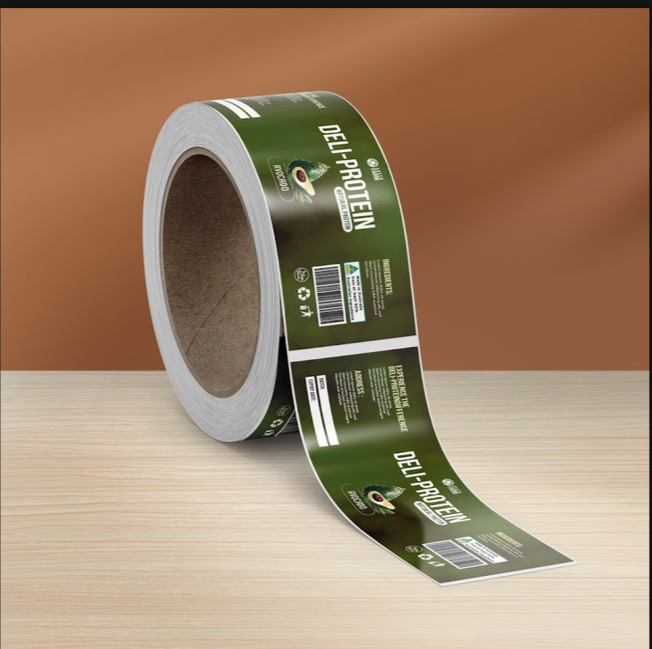
Most Sydney makers start the same way. A good product, a tight budget, and a quote for ten thousand labels that swallows half the month’s cash. Small-batch label printing sits at the other end of that decision, and for anyone still shaping a product, it usually makes more sense. You order what you need now. You keep the rest of your money free for stock, markets, or the next recipe trial.
Here is the part that gets missed. Bulk pricing looks cheaper per label, but it only works if nothing about your product changes for a year or two. Small batch label printing accepts that things will change, because they usually do. Your ingredients list shifts. Your logo gets tidied up. A stockist asks for a different size. Each of those turns a cupboard full of labels into waste.
The Real Cost of Sitting on Thousands of Labels
Think about what a bulk order actually buys you. Not just labels, but a commitment to the exact version of your brand that existed the day you placed the order.
Perhaps that feels fine right now. Many makers find out otherwise within six months.
- Recipe or ingredient changes make the old wording wrong.
- A rebrand leaves you using labels you no longer like
- Retail size changes make the dimensions useless.
- Poorly stored labels can curl, mark, or pick up dust.
None of that shows up in the per-unit price. It shows up later, when you are standing in front of a box you cannot use and quietly deciding whether anyone will notice.
Small Batch Label Printing Keeps Your Brand Current
Shelves in Sydney move quickly. A deli in Marrickville or a providore in Surry Hills refreshes its range more often than most people think, and the products that hold their spot usually look current.
Short runs let you keep pace. Print a few hundred, see how they perform, adjust the artwork, print again. That loop costs very little at small order quantities.
It also removes the fear of trying something. A seasonal flavour, a limited release, a collaboration with another maker. Those ideas die fast when the minimum order is five thousand.
Source: https://drive.google.com/drive/folders/1nbnThfG-iC5ZMh06jR0qapkeuQk3nXuF
Testing Designs Without Betting the Budget
Ask yourself a simple question. Do you know for certain which label version sells better?
Most makers don’t, because they’ve never had the chance to compare. With short runs, you can print two designs, take both to a market, and watch what people pick up. The feedback is immediate and honest. Nobody at a stall pretends to like a label.
Small-batch label printing turns design into something you test rather than guess at. That is a different way of working, and I think it suits newer brands far better than the old approach of committing early and hoping.
Choosing Materials That Match the Product
Short runs make material choices easier too, because you are not locking yourself in.
Paper labels work well for dry goods, coffee bags, jars and most pantry items. They print beautifully and cost less.
Synthetic polypropylene labels suit products that meet moisture. A body wash bottle in a steamy bathroom, a gin bottle pulled from an ice bucket, a serum sitting near a basin. Those labels hold up where paper would soften or lift.
Metallic silver labels give a foil effect without the foiling, which helps premium products look the part on the shelf.
A sample kit sorts most of this out quickly. Feeling the stock in your hand beats reading a specification sheet.
What Short Runs Mean for Sydney Spirit and Beverage Brands
Sydney has a strong distilling scene, with gin and whisky producers across the inner west and beyond. Those brands naturally release small batches. A single cask, a seasonal botanical, a one-off collaboration.
Printing labels in matching quantities makes sense. You are not forcing a bulk order onto a product that only exists for one run.
Craft beer works the same way. New releases arrive constantly, and each needs its own label and artwork.
Source: https://drive.google.com/drive/folders/1nbnThfG-iC5ZMh06jR0qapkeuQk3nXuF
How Ordering Actually Works
The process is online from start to finish. You choose your shape, size and material, upload your artwork or build it in the editor, and place the order through the website. Quotes come through the same way.
Personalised labels are dispatched in three to five business days.
Everything arrives on rolls rather than sheets, which speeds up application whether you are doing it by hand or running a machine.
Next steps are simple. Work out how many labels you will realistically use in the next three months, order that amount, and see how the design performs before you commit to more.
Where This Leaves Smaller Brands
Bulk runs made sense when printing short quantities was genuinely expensive. Digital presses changed that, and the maths now favours flexibility for most small producers.
You keep your cash. You keep your options. You keep the freedom to change your mind, which almost every growing brand does at least once.
Order what you need, see how it goes, and print again when you are ready.
