

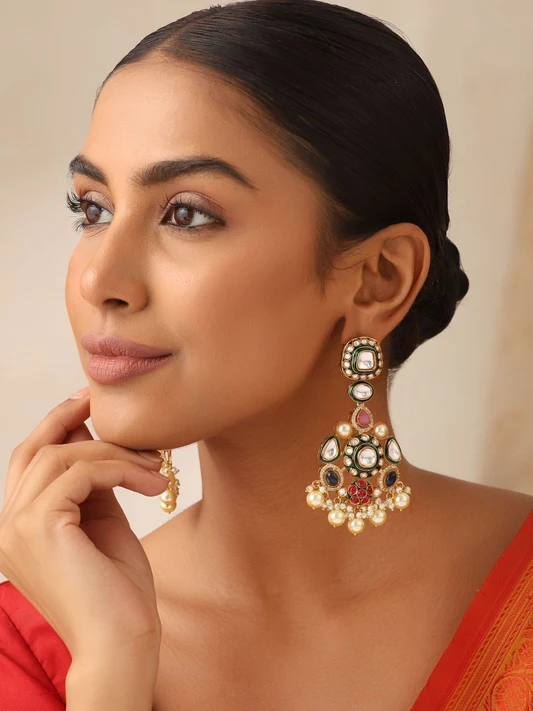
One fall season can bring a haldi, a sangeet, a reception and two Diwali parties, and each invitation quietly suggests a new outfit. Most closets cannot keep up with that pace, and few budgets want to. Indian traditional earrings offer a simpler answer to that pressure, and a good pair costs far less than a fresh lehenga or anarkali.
The outfit itself rarely needs replacing. Indian traditional earrings sit right beside the face, so they change how an outfit reads more than almost any other piece. The lehenga or saree you already own can look quiet at a cousin’s engagement lunch and dressed up at a late-night sangeet, and the difference comes down to the size and sparkle of the pair you pick.
The Hidden Price of a New Outfit for Every Function
Group Photos Keep the Outfit Count Climbing: Many women buy a separate outfit for each function because group photos and shared albums make repeats easy to notice. In everyday styling work, stylists who dress whole families for wedding weekends routinely see guests arrive with a new lehenga for every event and no plan to wear them twice. Closets fill with once-worn pieces, and the next invitation restarts the cycle.
Waiting until the Last Week Narrows the Choices: Leaving outfit decisions until the week of an event usually means paying more for fewer options, since custom stitching and alterations often need several weeks. Ready-to-wear sizes thin out as wedding dates cluster, and the worry about outfit repeating pushes many shoppers into a rushed purchase. Planning a few earring changes ahead of time removes most of that pressure.
Earrings Decide Whether an Outfit Reads Understated or Festive
Portraits Frame the Ears, Not the Hemline: Event photos that guests share are often head-and-shoulder portraits, so earrings show up in nearly every frame while hem detail gets cropped out. A lehenga border with hours of hand embroidery may barely appear in those shots. Swapping the earrings changes what people see, which is why one familiar outfit can pass as a fresh look in the next album.
Moving One Kurta Set from Puja to Reception: One emerald kurta set can stretch across several events when only the earrings change. Worn with Polki pearl studs, it stays understated for a weekday puja. Add Kundan jhumkas with a pearl chain and the same set turns festive enough for a mehndi, while long chandbalis with green or ruby stones push it into a statement look at a reception.
Lighter Pairs Compared with Elaborate Statement Earrings
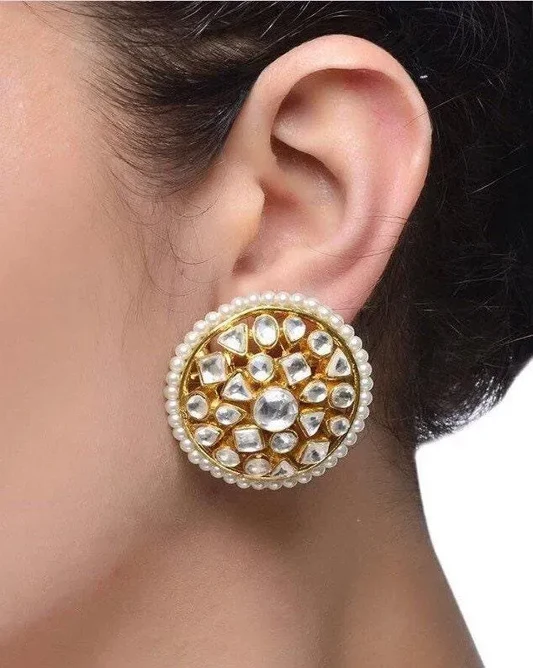
Light Studs and Hoops Suit Long Daytime Events: Lightweight earrings like Kundan studs or pearl-edged hoops suit daytime events because they stay comfortable for hours and leave room for a busy neckline. These smaller Indian traditional earrings also fit office Diwali celebrations and temple visits, where a quieter look feels right. The trade-off shows up in large banquet halls, where a delicate pair can disappear against heavy zari work.
Chandbalis and Long Drops Carry Evening Events: Chandbalis and long Kundan statement earrings suit evening receptions and sangeets because their size reads clearly across a crowded room and in group photos. Weight adds up over a five-hour event, and a heavy pair beside a wide choker can crowd the neckline. Many women skip the necklace on these nights or pick a pair with a chain that clips into the hair.
Stretching an Ethnic Wardrobe across a Full Year
A Few Good Pairs Can Outwork One New Lehenga: A rotation of three or four earring pairs, ranging from light studs to one bold chandbali, often costs less than one new lehenga and covers far more events. The approach matches the thinking behind slow fashion, which favors wearing what you own more often over buying something new for each occasion. Earrings also move between sarees and shararas without a single alteration.
Occasion Edits Point to the Pair You Still Need: Shopping by occasion makes an earring rotation easier to build, because it starts from the events on your calendar rather than from whatever pair caught your eye. A traditional earring collection, paired with shop-by-occasion edits for casual, party, festive and bridesmaid looks, lets you spot the missing piece, perhaps a mid-weight jhumka for sangeets, and buy only that.
Quick Checks before Rewearing a Favorite Ethnic Outfit
Matching the Pair to the Event Comes First: Choosing Indian traditional earrings after the event and neckline are settled gives a repeat outfit the best chance of looking new. A few quick checks in front of a mirror, plus one photo taken from the shoulders up, will show whether the chosen pair changes the look enough to feel fresh. The points below cover what most people miss.
- A high or embroidered neckline usually looks best with long earrings and no necklace.
- Stones that echo one shade from the print look more deliberate than a perfect color match.
- Earrings in the same metal tone as the zari border look planned, not like an afterthought.
- A pair that feels heavy after one hour will probably come off before dinner.
- Changing the dupatta drape along with the earrings makes a repeat even harder to spot.
Fresh Looks from a Familiar Closet
The right pair of Indian traditional earrings lets one outfit move from a family brunch to a late reception without feeling like a repeat. Each invitation met with a brand-new outfit adds one more piece that rarely leaves the closet. Browse the traditional earring collection by occasion and pick one light pair and one statement pair for your next event.
