

Sun-conscious consumers are no longer satisfied with sunscreen alone. From hiking shirts to swimwear, beach umbrellas, and children’s sun hats, more shoppers are asking a simple question before they buy: how much ultraviolet radiation will this fabric actually block? That question has turned fabric UV protection into one of the fastest-growing performance claims in apparel and outdoor gear, and it has pushed textile mills, brands, and testing labs to get serious about proving their numbers rather than just printing them on a swing tag.
What “Fabric UV Protection” Actually Means
Every textile blocks some ultraviolet light simply by existing between skin and sun, but not all fabrics block enough of it to matter. Fabric UV protection is typically expressed as a UPF (Ultraviolet Protection Factor) rating, a number that tells you how many times longer skin covered by that fabric can be exposed to UV rays before burning, compared to bare skin. A UPF of 50 means the fabric lets through only a fraction of incoming UV radiation, offering a meaningfully higher level of protection than a UPF of 15.
Because UV radiation actually comes in two relevant bands, UVA (long-wave) and UVB (short-wave), a full evaluation of a fabric’s protective performance also looks at the UVA/UVB transmittance ratio, not just the single UPF figure. This distinction matters because UVA rays penetrate deeper into skin and are linked to long-term damage, while UVB is the primary cause of sunburn. A fabric that scores well on UPF but poorly on UVA blocking isn’t giving wearers the full picture of protection.
What Changes a Fabric’s UV Protection
UV protection isn’t a fixed property of a fiber type — it’s the outcome of several variables working together:
- Fiber and weave density. Tightly woven or knitted fabrics with smaller gaps between yarns physically block more UV rays than loosely constructed fabrics.
- Color and dye. Darker and more saturated colors generally absorb more UV radiation than pale or pastel shades of the same fabric.
- Weight and thickness. Heavier fabrics tend to transmit less light overall, UV included.
- Stretch and wet conditions. Many fabrics lose some of their protective capability when stretched over the body or soaked with water, which is why swimwear and activewear are often evaluated in both dry and wet states.
- Finishes and treatments. UV-absorbing chemical finishes can meaningfully boost a fabric’s rating without changing its weight or hand-feel.
This is why identical-looking fabrics from different mills, or even different dye lots of the same fabric, can carry noticeably different UPF ratings — and why claims need to be backed by actual instrumental testing rather than assumption.
How Fabric UV Protection Is Actually Tested
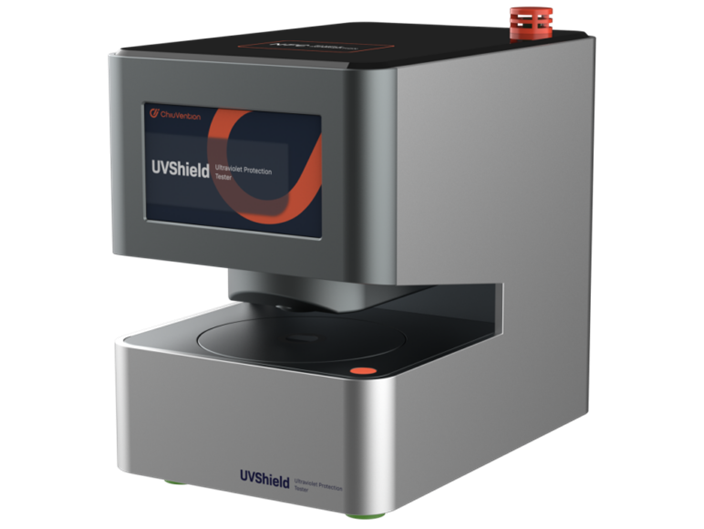
Objective UV testing relies on a specialized instrument commonly known as a UV transmittance analyzer or UPF tester. These instruments shine a controlled ultraviolet light source through a textile sample and measure exactly how much radiation passes through across the UV spectrum, generally somewhere in the 250–450 nm wavelength range. From that transmittance data, the instrument’s software calculates the UPF value, the UVA and UVB blocking rates, and the critical wavelength — the point in the spectrum where a fabric’s protective performance starts to fall off.
A rigorous test protocol usually involves:
- Sample preparation — cutting several representative swatches, avoiding fabric near cut edges or with visible defects, and preparing separate samples for each color or weave pattern present in a multi-color textile.
- Conditioning — letting samples acclimate under standardized temperature and humidity conditions before testing, as required by whichever standard is being followed.
- Dry-state testing — measuring the fabric in its normal, unstretched, dry condition, often rotating the sample to check for inconsistent protection across its surface.
- Wet-state testing — soaking the sample, extracting it to a defined moisture level, and re-testing, since fabrics such as swimwear are worn wet far more often than dry.
- Data analysis — the instrument compares UV transmission through air versus through the fabric to calculate the final UPF and blocking-rate figures.
Modern UV protection testers automate almost this entire workflow. One-touch or NFC-based sample scanning, automatic wavelength scanning across the full UV spectrum, and built-in report generation have replaced what used to be a slow, largely manual process involving separate spectrophotometer readings and hand calculations. Some newer instruments also rotate the sample through a full range of angles during testing, rather than reading it from a single fixed position, which produces more representative results for fabrics with uneven weave or print patterns.
Standards That Govern UV Testing
Because sun protective apparel is sold globally, UV testing has to satisfy a patchwork of regional standards, including:
- AATCC 183 (United States)
- AS/NZS 4399 (Australia/New Zealand)
- JIS L 1925 (Japan)
- BS 7914 and EN 13758-1 (Europe/UK)
- GB/T 18830 (China)
- ASTM D6603
Each standard has slightly different requirements around sample conditioning, wet versus dry testing, and how the final UPF rating is calculated and rounded. A textile test lab or manufacturer selling into multiple markets typically needs equipment and procedures capable of covering several of these standards at once, rather than running separate tests on separate machines for each region.
Why This Matters for Brands and Manufacturers
For apparel brands, an accurate fabric UV protection rating isn’t just a marketing bullet point — it’s a compliance and liability issue. Overstating a UPF value can expose a brand to regulatory action or consumer complaints, especially in markets like Australia where sun protective clothing claims are closely scrutinized. Underselling a fabric’s real performance, on the other hand, means losing a competitive edge in a category where consumers are increasingly willing to pay more for verified sun protection.
For mills and testing labs, investing in reliable, standards-compliant UV testing instrumentation pays off in fewer disputes with buyers, faster turnaround on certification requests, and the ability to fine-tune fabric construction, dye recipes, and finishes to hit a target UPF rating before mass production begins — rather than discovering a shortfall after goods have already shipped.
The Bottom Line
Fabric UV protection has moved from a niche outdoor-gear feature to a mainstream expectation across sportswear, childrenswear, swimwear, and everyday apparel. Meeting that expectation reliably means going beyond fiber content assumptions and into actual spectral testing — measuring real transmittance data, in both dry and wet states, against the specific standard a target market requires. As UV testing instruments continue to get faster and more automated, that level of verification is becoming easier for mills and brands of every size to build into their normal quality control process, rather than treating it as an occasional lab exercise.
