

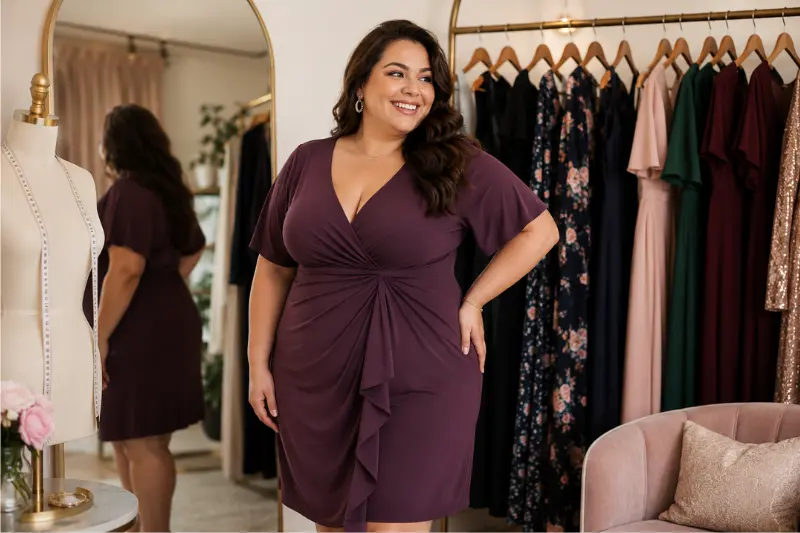
If you have ever bought an online item labeled women’s XXXXL size only to find it too tight in the shoulders or too boxy in the waist, you are not alone. Sizing in the fashion industry is notoriously inconsistent, and extended plus sizes suffer the most from this lack of standardization.
This guide covers everything you need to know about women’s XXXXL size: what measurements it corresponds to, how it translates across countries and brands, which styles flatter different body shapes, and exactly where to find clothes that fit beautifully. Whether you are shopping for the first time in this size range or you simply want clarity on the numbers, this article gives you real, actionable information.
What Does Women’s XXXXL Size Mean?
Women’s XXXXL size is also written as 4XL. It sits in the extended plus-size range and typically refers to a US women’s dress size of 26 to 28, depending on the brand.
The “XXXX” notation simply means four sizes above extra-large (XL). Some brands use the notation 4X or 4XL interchangeably with XXXXL. All three refer to the same general size tier, though exact measurements can vary by up to two inches from one retailer to another.
Women’s XXXXL Size Chart: Standard Measurements
Use the chart below as your starting reference. Always compare these numbers to the brand-specific size chart before purchasing, because cut, fabric stretch, and vanity sizing all affect fit.
US Women’s XXXXL Size Measurements
| Measurement | US Women’s XXXXL Size |
|---|---|
| Bust | 52 to 54 inches (132 to 137 cm) |
| Waist | 44 to 46 inches (112 to 117 cm) |
| Hips | 54 to 56 inches (137 to 142 cm) |
| Dress Size (US) | 26 to 28 |
| Dress Size (UK) | 30 to 32 |
| Dress Size (EU) | 56 to 58 |
| Dress Size (AU) | 30 to 32 |
How to Take Your Measurements Accurately
Getting the right fit starts with accurate numbers. Here is how to measure yourself correctly:
- Bust: Wrap the tape around the fullest part of your chest, keeping it parallel to the floor. Do not pull it tight.
- Waist: Measure around your natural waist, which is the narrowest point of your torso, typically just above the belly button.
- Hips: Stand with your feet together and measure around the fullest part of your hips, usually 7 to 9 inches below the natural waist.
- High hip: Measure about 3 inches below the natural waist. This number matters for trousers and skirts with fitted waistbands.
- Inseam: Measure from the crotch seam down to the ankle. This is critical for trousers.
Write all five measurements down before you shop. A two-inch difference between your hips and the brand’s XXXXL hip measurement tells you far more than the label alone.
Women’s XXXXL Size Conversion Chart
International size labeling is one of the biggest sources of confusion in women’s XXXXL size shopping. A UK 30 is not the same as a US 30, and a European 56 is not the same as a French 56. Use the table below to convert your women’s XXXXL size across the most common systems.
| US Size | UK Size | EU Size | French Size | Australian Size | Italian Size |
|---|---|---|---|---|---|
| 26 | 30 | 56 | 62 | 30 | 62 |
| 28 | 32 | 58 | 64 | 32 | 64 |
Important note on Asian sizing: If you shop from brands based in China, South Korea, or Japan, women’s XXXXL size on their charts often corresponds to a smaller measurement than US or EU equivalents. Always cross-reference the bust, waist, and hip numbers in centimeters rather than relying on the letter or number label.
XXXXL vs. Adjacent Plus Sizes: What Changes?
Understanding how women’s XXXXL size differs from its neighboring sizes helps you make better decisions when a brand runs large or small.
| Size | Typical US Dress Size | Bust | Waist | Hips |
|---|---|---|---|---|
| 3XL (XXXL) | 22 to 24 | 48 to 51 inches (122 to 130 cm) | 40 to 43 inches (102 to 109 cm) | 50 to 53 inches (127 to 135 cm) |
| 4XL (XXXXL) | 26 to 28 | 52 to 54 inches (132 to 137 cm) | 44 to 46 inches (112 to 117 cm) | 54 to 56 inches (137 to 142 cm) |
| 5XL (XXXXXL) | 30 to 32 | 55 to 57 inches (140 to 145 cm) | 47 to 49 inches (119 to 124 cm) | 57 to 59 inches (145 to 150 cm) |
The jump from 3XL to women’s XXXXL size is roughly two dress sizes. If you are between sizes, use your largest measurement as the anchor point for tops and dresses, and your waist measurement as the anchor for trousers and skirts with defined waistbands.
Why Women’s XXXXL Size Fit Varies So Much Between Brands
This is the single biggest frustration shoppers in the women’s XXXXL size range report, and it is worth explaining clearly.
Lack of industry standardization. Unlike men’s clothing, which uses inch-based measurements on the label, women’s sizes are arbitrary numbers. No law or industry body requires a brand’s size 26 to measure the same as another brand’s size 26.
Fit models vary by brand. Each clothing company samples garments on a specific fit model whose proportions become the template for their entire size range. A brand whose fit model carries weight in the hips will cut their women’s XXXXL size generously through the seat and snugly at the waist. A brand with a straighter-figure fit model will do the opposite.
Grading inconsistencies. When a factory scales a pattern up from a size 12 to a women’s XXXXL size, they use a mathematical grading process. Different grading methods produce different shoulder widths, sleeve lengths, and torso proportions at the same labeled size.
Vanity sizing shifts over time. What brands labeled XXXL twenty years ago now gets labeled XXL. This inflation continues to push through the extended size range.
The practical takeaway: always measure yourself, always compare your numbers to the brand’s stated measurements, and always check the return policy before ordering a women’s XXXXL size item for the first time from a new retailer.
Body Shape Guide for Women’s XXXXL Size
Knowing your body shape gives you a framework for choosing cuts and styles that highlight what you love and balance what you prefer to downplay. This applies regardless of size, and it is just as relevant in the women’s XXXXL size range as it is in any other.
Apple Shape (Torso-Forward)
If you carry most of your weight in the bust and midsection with narrower hips and thighs, you have an apple-shaped figure.
What works:
- Empire waist dresses that skim rather than cling at the midsection
- V-necklines, which draw the eye downward and lengthen the neckline
- A-line skirts that flare from the hip
- Wrap tops that create a defined waistline
- Straight-leg or bootcut trousers that add volume to the lower body
What to avoid: Banded hems at the widest point of the midsection, clingy jersey knits around the stomach, and cropped tops.
Pear Shape (Hip-Forward)
If your hips and thighs are notably wider than your shoulders and bust, you have a pear-shaped figure.
What works:
- Tops with embellishment, structure, or pattern to draw the eye upward
- Boat necklines and wide-shoulder silhouettes
- Dark, plain-colored trousers and skirts paired with a statement top
- A-line and fit-and-flare dresses
- High-waisted bottoms that define the waist
What to avoid: Skinny trousers without a strong upper-body counterbalance, gathered skirts at the hip, and pockets placed at the widest point of the hips.
Hourglass Shape
If your bust and hip measurements are roughly equal and you have a defined waist, you have an hourglass figure.
What works:
- Wrap dresses, which follow the natural curve
- Fit-and-flare silhouettes
- Belted styles at the natural waist
- Stretch fabrics that move with the body
What to avoid: Boxy, oversized silhouettes that obscure the waist definition.
Rectangle Shape
If your bust, waist, and hip measurements are similar, creating a straighter silhouette, you have a rectangle figure.
What works:
- Peplum tops that suggest a waistline
- Ruffled or tiered skirts that add hip volume
- Belts worn at the waist to create shape
- Wrap styles and asymmetric hemlines
Fabric Guide for Women’s XXXXL Size Comfort
Fabric choice matters more at women’s XXXXL size than at smaller sizes, because the total surface area of the garment is greater and the way fabric moves, breathes, and drapes becomes more visible.
Cotton jersey: The most forgiving everyday fabric for women’s XXXXL size. It stretches, breathes, and washes easily. Look for at least 95% cotton content for the best feel.
Modal and bamboo blends: Softer and more drape-forward than cotton jersey. Excellent for loungewear and relaxed tops. They resist pilling better than cotton over time.
Ponte fabric: A thick, structured knit that holds its shape beautifully. Ideal for trousers, blazers, and dresses where you want a polished, put-together look. Ponte bridges the gap between a casual stretch fabric and a tailored woven.
Linen: Breathable and cooling in warm weather. Linen wrinkles easily, but a relaxed, slightly rumpled look is part of its appeal. Look for linen-cotton blends if you want easier care.
Chiffon and georgette: Lightweight and flowy. These fabrics are popular for occasion dressing because they drape elegantly. Look for lined versions, as single-layer chiffon can be sheer.
Fabrics to approach with caution: Rigid denim without stretch (it restricts movement and creases uncomfortably), unlined lace (it can be scratchy and cling unevenly), and very thick brocade or heavy wool (the weight can be unflattering and uncomfortable).
Common Fit Problems in Women’s XXXXL Size (and How to Fix Them)
Problem: Armhole too tight
This is one of the most common complaints in women’s XXXXL size tops and dresses. Standard garment grading often underestimates how armhole depth needs to increase as the size goes up.
Fix: Look for brands that specifically use plus-size fit models and note high armhole fit in their product descriptions. Alternatively, size up and have a tailor take in the waist.
Problem: Waistband gaps at the back of trousers
Women’s XXXXL size often comes with a higher hip-to-waist ratio than the standard pattern accounts for. The result is a trouser that fits over the hips but gaps two to three inches at the back waistband.
Fix: Look for trousers with a stretch waistband or an elasticated back panel. Alternatively, choose high-waisted styles, which sit at the natural waist rather than the hip and are less prone to this issue. A tailor can also take in the back waistband for under ten dollars at most alterations shops.
Problem: Shirts that pull across the bust
Button-front shirts are notoriously difficult to fit for women’s XXXXL size with a larger bust. The fabric pulls and gaps between the buttons.
Fix: Choose shirts designed specifically for plus sizes with additional ease built into the bust. Look for shirts with princess seaming (vertical seams that curve around the bust) rather than dart-and-pleat styles.
Problem: Dress length too short
When a dress is designed on a shorter fit model, the women’s XXXXL size version may land several inches higher on a taller or longer-torso figure than intended.
Fix: Check the product description for the model’s height and the length measurement. If a midi dress is described as 44 inches long and you need 48 inches to hit mid-calf, look for tall sizing or long-length options. Many plus-size brands now offer petite, regular, and tall length variations.
How to Shop Online for Women’s XXXXL Size Confidently
Online shopping is where most women’s XXXXL size purchases happen, because brick-and-mortar stores rarely carry an adequate selection. Here is a step-by-step approach that reduces returns significantly.
Step 1: Measure yourself fresh. Measurements change over time. Re-measure before every major shopping trip, not just once a year.
Step 2: Find the brand’s size chart, not a generic one. Every brand page should have a dedicated size guide. Use their specific measurements, not a general internet table.
Step 3: Compare your largest measurement. If your bust falls in women’s XXXXL size on the chart but your hips fall in 5XL, size up and plan to have the waist taken in if needed. It is much easier to take in a garment than to let it out.
Step 4: Read reviews, specifically from people who mention their size. Reviews from customers who share their measurements and how the item fit are far more useful than aggregate star ratings.
Step 5: Check the return policy before you buy. Free returns significantly lower the risk of ordering a women’s XXXXL size from a brand you have not tried before.
Step 6: Order two sizes when in doubt. If you are genuinely between sizes, ordering both and returning the one that fits less well is more efficient than ordering, returning, reordering, and waiting.
Styling Tips: Making Women’s XXXXL Size Outfits Look Intentional
The power of one focal point
Choose one element of an outfit to draw attention: a bold neckline, a colorful top, a statement belt, or a printed skirt. When everything in an outfit competes for attention, the eye does not know where to go. In women’s XXXXL size clothing, where garments cover a larger surface area, one clear focal point reads as polished and intentional.
Monochromatic dressing
Wearing one color from head to toe (or two close shades of the same hue) creates an unbroken vertical line that reads as tall and sleek. This is one of the most effective and underused tricks for women’s XXXXL size dressing.
Proportion balancing
If you wear a voluminous top, pair it with something more fitted on the bottom, and vice versa. This prevents the outfit from reading as one large shapeless mass.
Necklines and face framing
A V-neck or scoop neck draws the eye toward the face and elongates the neckline. Jewel necks and boat necks work beautifully on women’s XXXXL size if you have wider shoulders, as they create an elegant horizontal line.
The right undergarments
A well-fitting bra is the foundation of every outfit in women’s XXXXL size range. An ill-fitting bra changes the entire silhouette of a top, dress, or jacket above it. Get fitted regularly, because bra size can change with body changes. Similarly, seamless underwear eliminates visible lines under fitted garments.
Where to Find Women’s XXXXL Size Clothing
Dedicated plus-size retailers
Brands that exist specifically to serve the plus-size market invest more heavily in fit modeling and pattern grading at the women’s XXXXL size level. These include brands across casual, workwear, and occasion wear categories.
Department stores with extended sizes
Many mainstream department stores have expanded their extended size offerings online, even when the physical stores carry limited stock. Filter specifically for women’s XXXXL size or 4XL rather than browsing the general plus-size section.
Custom and made-to-measure options
If standard women’s XXXXL size cuts consistently fail your body shape, custom sizing is worth exploring. Several online services allow you to input your exact measurements and produce garments graded specifically to your figure. Prices have dropped significantly as these services have scaled.
Vintage and secondhand
Vintage sizing does not correspond to modern labels. A vintage garment labeled “18” or “20” may actually measure closer to a women’s XXXXL size today. Always go by the measurements on vintage listings, never the label.
Caring for Women’s XXXXL Size Garments
Larger garments require a little more attention in washing and drying because the increased fabric area means more stress on seams and more weight when wet.
Washing: Turn dark-colored garments inside out to prevent fading. Use a gentle cycle for delicate fabrics. Wash women’s XXXXL size items in a mesh laundry bag to reduce friction and protect seams.
Drying: Tumble drying on high heat shrinks natural fibers and wears out elastic waistbands quickly. Dry on low heat or lay flat to dry when possible. Hang-dry structured knits, as hanging a heavy wet garment can stretch the shoulders out of shape.
Storage: Fold heavy knits rather than hanging them, as the weight causes the garment to stretch over time.
Frequently Asked Questions About Women’s XXXXL Size
Is women’s XXXXL size the same as a size 26?
In most US brands, yes. Women’s XXXXL size typically corresponds to a US dress size of 26 to 28. However, this can vary. Always check the brand’s specific size chart measurements.
How does women’s XXXXL size compare to a men’s XXXXL?
Men’s and women’s sizing systems are completely different. Men’s XXXXL size typically has a chest measurement of around 52 to 56 inches. Women’s XXXXL size has a bust measurement of around 52 to 54 inches. The waist and hip proportions differ significantly between male and female cut garments.
My bust is XXXXL but my hips are 5XL. What size should I order?
Size to your largest measurement, then have the garment taken in where needed. A tailor can adjust a waist or bust easily. It is not possible to let out a garment that is too small.
Do all plus-size brands carry women’s XXXXL size?
No. Some brands stop at 3XL or XXXL. Look for brands that explicitly list 4XL or XXXXL in their size range. The availability of women’s XXXXL size has improved significantly in recent years, but gaps remain, particularly in workwear and formalwear.
Can women’s XXXXL size vary by garment type within the same brand?
Yes. A brand’s size chart for dresses may use different measurements than their size chart for trousers or tops. Always check the specific product’s size chart, not just the brand’s general guide.
Key Takeaways
- Women’s XXXXL size typically corresponds to a US dress size of 26 to 28, with a bust of 52 to 54 inches and hips of 54 to 56 inches.
- Always measure yourself and compare your numbers to the brand’s specific size chart rather than relying on the label alone.
- International size conversions vary significantly. A UK size 30, EU size 56, and US size 26 are all roughly equivalent to women’s XXXXL size, but exact measurements differ.
- Common fit problems in women’s XXXXL size include tight armholes, waistband gaps, and bust pulling on shirts. Each has practical solutions.
- Fabric choice, body shape awareness, and one clear outfit focal point make the biggest difference in how confidently a women’s XXXXL size outfit reads.
- The availability of well-made, stylish women’s XXXXL size clothing has expanded considerably. Knowing where to look and how to shop online methodically significantly reduces returns and frustration.
Conclusion
Finding clothes in women’s XXXXL size that fit well is entirely achievable once you understand the landscape. The challenge has never been your body. It has been an industry that standardized sizes for a narrow range and left extended sizes as an afterthought. Armed with your own measurements, a clear understanding of international conversions, and the knowledge that every brand grades differently, you can shop with real confidence. Focus on the numbers, not the label. Know your body shape and use it to shortcut straight to the cuts that flatter you most. Choose fabrics that work with you, not against you, and when a garment does not fit as expected, reach for a tailor before you reach for a return label. Women’s XXXXL size clothing has improved dramatically in range, quality, and style. You deserve to look and feel exactly how you want to, and the information in this guide gives you the practical foundation to make that happen every time you shop.
